Thursday, February 23, 2023

Iraq, Afghanistan, Ukraine: Lessons to Live (or Die) By


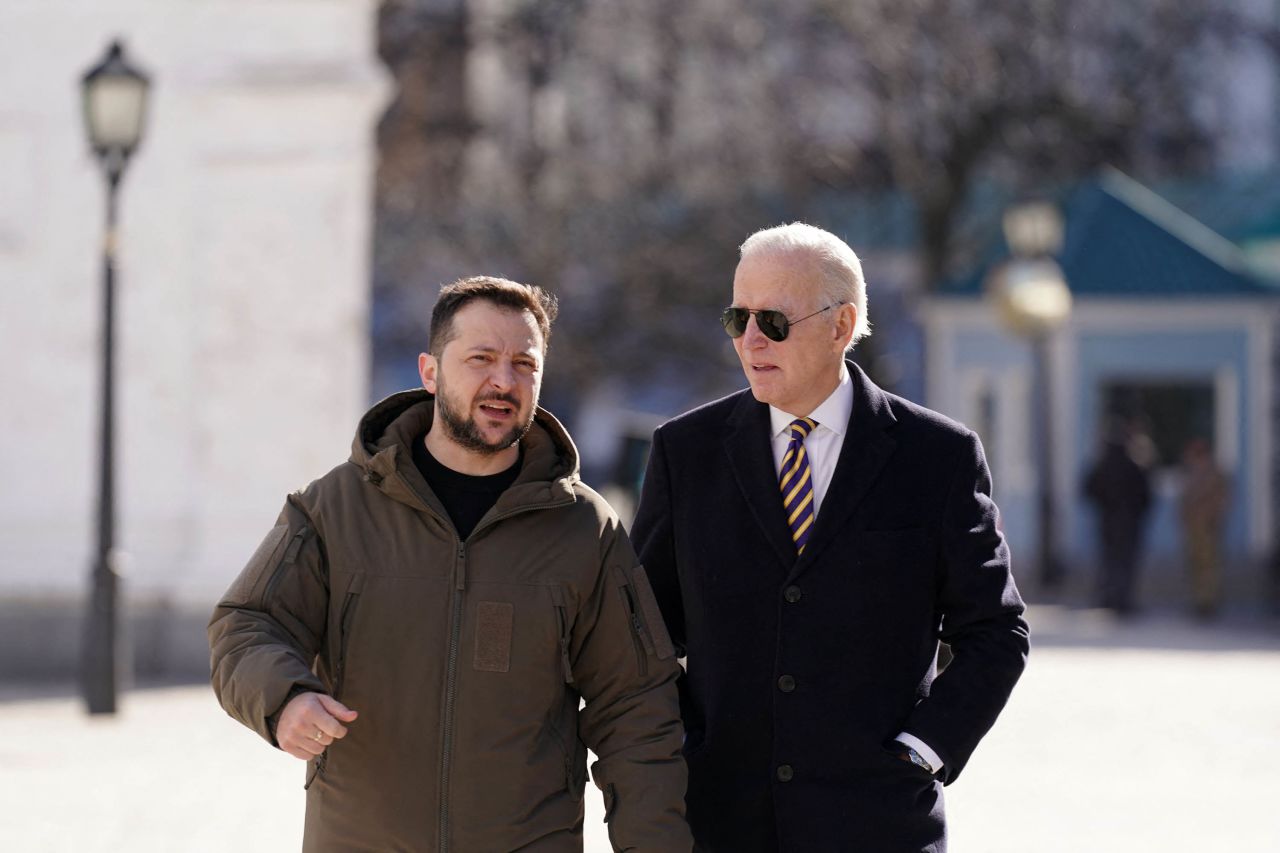
 Joe Biden’s surprise visit to embattled Ukraine is the latest in a series of adept political maneuvers that have heightened the stakes of that conflict and fostered unity of purpose among the allies standing in defiance of Vladimir Putin. As the war enters its second year, questions of strategy and the search for an “end game” become more urgent. What is the path forward, and how can past experience help us find it?

            Ukraine is the third in a series of object lessons about the nature of modern warfare that have unfolded on the global stage in the past two decades. The conflicts in Iraq, Afghanistan, and Ukraine all make manifest a common principle. This truth may be stated succinctly: “An army that believes in its cause will fight; an army that does not believe in its cause will run.”

            This truism might seem too cliché to merit remark, but somehow its significance has eluded leaders throughout the world. To be sure, the lesson is not new. Many conflicts in recorded history, dating back to ancient times, corroborate its validity. But it is worth noting that the world of microchips, satellites, and precision bombs has not altered its saliency. No amount of technology can make warfare a purely mechanical process. Politics remains a durable and determinative factor in military affairs.

            What, then, does a comparison of the conflicts in Iraq, Afghanistan, and Ukraine demonstrate, and how can such a comparison help world leaders make better decisions moving forward? The collapse of the Iraqi Army in the face of the ISIS assault of 2013 and of the Afghan Army in confrontation with the Taliban in 2021 stands in stark contrast to the resolve demonstrated by the Ukrainian Army in the past year. Juxtaposing the three conflicts demonstrates how decisive political factors can be to military outcomes. Both the Iraqi and Afghan armies possessed equivalent or superior numbers and armament relative to their respective opponents. The Ukrainian Army has been outgunned and outmanned from the very beginning.

            It thus must be very clear to world leaders, particularly the leadership of the NATO Alliance, that morale and motivation played a key role in all these events. But there seems to be a soft bigotry at work in the inferences drawn from these facts. European and American leaders appear to believe that the contrasting levels of commitment displayed by the soldiers of Iraq and Afghanistan on the one hand and the Ukraine on the other may be put down to “cultural” differences. Otherwise it is difficult to explain why NATO leaders are determined to make the same mistakes in Ukraine that they made in Iraq and Afghanistan.

           The people of Iraq and Afghanistan do not lack any of the potential for nationalistic conviction and commitment that the people of Ukraine have been proven to possess. The soldiers of Iraq and Afghanistan did not perform poorly for lack of patriotism, but because at the time of their deployment, their homelands were not true nation-states. Iraq and Afghanistan were both occupied by foreign powers, the leadership in Baghdad and Kabul were denied the autonomy and true powers of sovereign governments.

           This was, ironically (given my above remarks on the ways in which politics can trump technology), made most obvious to the soldiers of Iraq and Afghanistan by the state of their armaments. In Iraq, for example, at the time of the ISIS assault of 2013, the Iraqi Air Force had only two combat airplanes, both Cessna prop planes modified to carry a single Hellfire missile each. That was in contrast to the regime of Saddam Hussein, which had one of the largest air forces in the world, able to deploy hundreds of MiG, Mirage, and Sukhoi fighter aircraft.

This wide disparity in capability was demoralizing to the Iraqi Army of 2013 more for its political significance than its material, technological impact. The government of Saddam had been pathological and widely despised, but its ability to acquire and freely deploy advanced offensive weaponry demonstrated that it was truly sovereign. The Baghdad government of 2013 was just as clearly a client of the United States, prevented from arming their soldiers with the basic tools of a modern army by their colonial masters in Washington D.C.

            The Iraqi Army went up against ISIS with slightly better weaponry. They had light artillery and combat helicopters that ISIS did not possess. But the soldiers of ISIS were animated by religious fervor. They were willing to die in suicide attacks to make up for their inferior firepower. The soldiers of the Iraqi Army, in the face of such zealotry, were being asked to die in defense of a government that was obviously a puppet of Washington D.C. Is it really such a shock that many Iraqi soldiers did not feel this game was worth playing? Virtually the same dynamic was at work in Afghanistan, with identical results.

            The distinctive performance of the Ukrainian Army does not arise from differences in culture, but in context. Their Russian opponents do not exhibit any fraction of the zealous passion that animated ISIS or the Taliban. More importantly, Ukrainian soliders have never had to doubt that their national spirit is exerted in service of a government that is authentically sovereign. The Ukrainian Army was (and is) smaller than that of Russia, but well-armed and well-equipped with the current tools of war.

Moreover, though Ukraine has been materially dependent on foreign support of its war effort, Ukrainian leaders have never allowed such dependence to infringe upon their sovereign autonomy. This was publicly broadcast by Volodimir Zelensky’s famous declaration, in the face of American offers of transport to safety in the early days of the conflict, “I need ammunition, not a ride.” From that moment forward, the people of Ukraine have had reason to be confident that their leaders are setting their own agenda, without deference to the priorities of the US or any other foreign power.

Since the success of the NATO-Ukrainian partnership has depended upon the robustly nationalistic morale of the Ukrainian army and people, the worst thing that NATO leaders could do is to encroach upon or violate the sovereign dignity of Ukraine’s government or leaders. Yet when pundits and officials of the NATO nations speak publicly about the trajectory of the Ukraine conflict, they frequently entertain plans that would deeply offend their Ukrainian partners. A significant constituency among the NATO leadership seem to believe that a negotiated settlement could be reached allowing Russia to continue to occupy the Donbas region, the Crimea, and/or other Ukrainian territory currently held by Russian troops. The people and government of the Ukraine will never assent to such an accord.

It does not take much thought to realize why the same spirit that has animated Ukrainian resistance precludes a peace short of the total expulsion of Russian forces. The clear object of Russia’s offensive was to destroy the Ukrainian nation. For the resolution of this conflict to provide any assurance of Ukraine’s survival, it cannot legitimize the goals or methods of the Russian campaign to any degree. Thus the sanction of Russia’s occupation of any portion of Ukrainian territory will be perceived as tantamount to an invitation to attempt the destruction of Ukraine again, at some time in the indefinite future. Put yourself in the position of any of the middle-aged Ukrainian women who have taken up arms in defense of their homeland, imagine what they think as they look at their granddaughters, wondering if those children will have to live through the same cataclysm again, and you can quickly understand why any resolution of the conflict that does not entail a complete withdrawal of Russian forces will not be politically feasible in Ukraine.

If NATO continues to proceed as if a territorial “compromise” is achievable, the strategic partnership with Ukraine will eventually go sideways, producing outcomes comparable (in kind, if not degree) to what was seen in Iraq and Afghanistan. It is unlikely, given the robust spirit that has developed among Ukraine’s people and soldiers, that any pressure from or foot-dragging by NATO will shatter Ukrainian morale as was done to the armies of Iraq in 2013 and Afghanistan in 2021. But such a collapse is not impossible, given world enough and time. If you deprive Ukrainian soldiers and citizens of their nationalist aspirations, you deprive them of an asset that has been much more vital to their military success than money, supplies, or munitions.

There are catastrophes that fall short of an unlikely collapse of Ukrainian political will, however. It would be surprising if Volodimir Zelensky’s government had not already begun researching alternative sources of support, should NATO’s will and enthusiasm begin to flag. Kiev could strike out on its own, producing a far more volatile and unpredictable conflict that might induce horrific destruction and loss of life. The effects of such a development on the battlefield, on the internal politics of Ukraine, and on its relationship with the NATO allies could be profoundly tragic. There is little that Russia can do at this juncture to “win” the war, but there is much that NATO could do to lose it. 

What, then, are the lessons of Iraq and Afghanistan that can be applied to the conflict in the Ukraine? They boil down to this: success for NATO depends upon treating Ukraine as a genuine strategic partner, and not as a client or proxy. Any attempt to strongarm the government or people of Ukraine into a “compromise” they cannot accept will undermine all the progress toward a just resolution of the conflict that has been made thus far. The final goal of all partners in the anti-Putin coalition must be the total and complete withdrawal of all Russian forces from all of Ukraine. For that to happen, the Ukrainians must be supplied with the tools and weapons that will allow them to mount a successful offensive against superior Russian numbers.

          Vladimir Putin will never be dislodged from the Ukraine by purely diplomatic means. His political survival depends on the claim that this absurd, pointlessly destructive war has achieved some semblance of a strategic goal. For such a claim to be tenable, Putin must hold on to some portion of the Ukrainian territory he has annexed. He will never cease fighting unless his opponents assent to some portion of his territorial claims, but this is a concession that the leaders and people of Ukraine will never give. He thus must be driven out of Ukraine by force. Only when it is clear that his army cannot defend its position inside Ukraine will Putin have motive to come to the negotiating table, on the chance that he can barter an armistice in exchange for exemption from liability for the costs of the war.

            NATO leaders have a stark choice. One option is to totally and unconditionally support the Ukrainians in their campaign to restore the territorial integrity of their homeland. The only other choice is to accept defeat, and to face a world in which Vladimir Putin, to one degree or another, gets to set the rules of international relations. For the sake of the welfare of the global community, we must hope that NATO leaders choose correctly.

Wednesday, November 16, 2022

An Open Letter to Dave Chappelle


Dear Mr. Chappelle,


          Hello from the campus of Brooklyn College, where I teach in the Department of History. Long time fan, first time writer. I can hear you laughing as you read that, since it makes the reason for my letter so obvious.

           I watched your most recent SNL monologue on my DVR last night. I was away over the weekend, and it had taken a few days for Twitter and Facebook to cue me in that something interesting had happened. I was so intrigued I watched it twice (okay, I confess, my wife asking about it played a part in my second viewing). 

          It confirmed me in two impressions. The first is that you are perhaps one of the greatest artists our nation has ever produced. I knew you were talented. Some of your work on The Chappelle Show made me laugh as hard as any comedy I had ever seen in my life. But that monologue was a quantum leap beyond anything I've seen another comedian do in a public forum.

           My second impression was that you don't really understand the perspective of American Jews. Not really. I don't make that kind of assertion lightly about an artist of your obvious genius. No one develops powers of insight and creativity like yours without cultivating a great reservoir of empathy. But somewhere in your friendships and other interactions with members of the Jewish community you have come up against the limits of that resource.

           I think I understand what you were saying on Saturday night. "Talking has become too hard." Kanye is a case in point. Like you, he is a great artist. And I know how much you like and admire him personally. His performance of "Jesus Walks" with the Central State University marching band is my favorite part of Dave Chappelle's Block Party. Your SNL monologue is made all the more awe-inspiring because it was so much an act of personal courage and devotion to a friend.

          I see the logic in your argument. The price Kanye has paid is huge. One billion dollars for a few stupid remarks from a man unwell enough to ridiculously spout about being too rich to wear gold chains. It is especially unfair against the context of a man who told four Congresswomen of color to "go back where they came from" and yet still has every prospect of being the next Republican nominee for the presidency.

         But there's something you seem to be missing. You acknowledged that "the current climate" impacts how we should read Kanye's words. For Jews, that is like saying that the meteor hurtling toward earth should inform whether we decide to carry an umbrella. In a few short years we've watched lunkheads with tiki torches marching around chanting, a horde of fascists swarming like ants over the Capitol, a Nazi with an AR-15 shoot up a synagogue. 

        The other night a friend asked me "are they going to send us to the ovens?" I'm a historian, but I don't have a crystal ball. If like mine, your daughter were Jewish, would you feel confident that the answer to that question was nothing to worry about? 

        A man who can sell a billion dollars worth of shoes is a man that reaches A LOT of people. The Nazis who hung signs over highways saying "Kanye was Right" know exactly what that kind of publicity is worth. If things go the wrong way in 2024, that tag line is sure to make a comeback.

     You are right, it has become too hard to talk. But some of the reason for that lies with the toxic nature of so much that is being said. At times like this, it becomes as hard to listen as it is to talk. You have a brilliant voice, and I hope it is never silenced. But I hope you will listen too. 


                     Sincerely,


                     Andrew Meyer


Thursday, October 13, 2022

Between Despair and Hope in Ukraine


The war raging in Ukraine opens a new phase in the post-Cold War era of global affairs. For the past two decades international relations have been highly inflected by the events of September 11, 2001 and the US response to those attacks. Moving forward from the current moment the outcome of the war in Ukraine will have a similar shaping impact.

               The moral stakes in Ukraine are enormously high, but it is of course always advisable to take as practical and dispassionate a view of such conflicts as possible. We are well advised not to focus on what ideally should happen but rather on what is certain or at least most likely to happen in concrete terms. If we do so, however, we find that the moral and practical dimensions of the Ukraine war are inextricably intertwined. The dangers of thinking or acting too cynically are as grave as the potential pitfalls of moral idealism.

             To understand why this is so, one only has to begin by asking a deceptively simple-seeming question:  “Why did Vladimir Putin invade the Ukraine?” All of the reasons that Putin himself have given are utter nonsense. The idea that Ukraine is organically a part of “Mother Russia” was long ago shown to be ridiculous, in the strife following Putin’s machinations in Crimea and the Donbas region. The canard of “de-Nazification” is deliberately laughable. It broadcasts the contempt of a man who insists that anyone who opposes him does not even deserve to be spoken to seriously.

           The true logic of Putin’s invasion is ultimately inseparable from the logic of his obscenely cleptocratic regime.  Russia is territorially the largest nation on earth, covering more than 6.6 million square miles richly endowed with natural resources. Its 144 million people are among the best-educated in the world. Yet its economy is smaller than that of Italy, and its GDP per capita ranks fifty-seventh in the world, well behind nations such as Greece (51) or the Bahamas (45). Russia’s rate of economic growth is shockingly slow when compared with other formerly communist nations possessed of similar assets.

       All of these conditions reflect the reality that Putin has turned what should be one of the wealthiest and most powerful nations on earth into the turf of a primitive criminal syndicate of which he is head. He and his cronies are a literal network of vampires who keep order by sucking the lifeblood of Russian society nearly dry. This network extends beyond Russia’s borders into the satellite nations of the former USSR. The sheer improbability of such a monstrosity in the 21st century was made manifest by the “Revolution of Dignity” that swept Ukraine in 2014. The grotesque insult of being made part of a thieves’ banquet for Putin’s cronies was infuriating enough to galvanize Ukrainians and set them on a path to both democratic independence and a collision with Putin’s murderous machine.

        Only if we remain clear about how ludicrously retrograde Putin’s regime really is can we understand the degree of desperation expressed in February’s invasion. In explaining why this war happened many observers either give too much credence to Putin’s deliberate absurdities or focus myopically on the wrong side of the “risk-reward” calculation upon which the war was predicated. It is true that Putin was emboldened by overtures of friendship from Xi Jinping and by the success his “active measures” campaigns had achieved in sowing discord throughout Europe and America. He was also obviously ignorant of just how degraded his military had been by the corrosive graft of his cleptocratic regime.

          But though these facts help explain why Putin sorely underestimated the risks of invasion, they do not account for the urgent goals that he gambled so much to achieve.  By February it had become clear that the resistance to vampiric Putinism had spread from Ukraine into Belarus, Kazakhstan, and beyond. Robust popular protests against the cleptocratic regimes in those states coincided with the resurgence of activism by Russian dissidents like Alexei Navalny. Putin knew that he had to put the vampires back in charge in Ukraine, or the whole network underpinning his power might unravel and bring him down with it. That is what this war has been about all along, and that is why there is little that anyone can offer Putin in pursuit of a negotiated peace. Anything short of sinking his fangs back into Ukraine’s arteries will not appease him, and the Ukrainians know it.

           Since the ends Putin has been pursuing are so transparently and egregiously illegitimate, any “compromise” aimed at avoiding tragedy will inevitably produce a tragedy as bad or worse.  This is clearest from the perspective of the Ukrainians. The horror of more death and destruction is awful. But the horror of trading in their new but vibrant democracy for the rule of Vladimir Putin  (a man who, for example, builds palaces for himself at the cost of $1.4 billion while poisoning his opponents with polonium) is even worse.

              Yet even if we branch outward from the perspective of Ukraine to that of the entire world, there is no redeeming value in offering Putin an “off ramp.” Pundits express understandable concern about the prospect of Putin using nuclear weapons (there is obviously no limit to how many he is willing to murder), but the very nature of his threat compels world leaders to ignore it. Since Putin’s goals in this conflict are completely and transparently illegal, immoral, and illegitimate, there is no way that any degree of success he garners will be perceived as anything but the fruits of nuclear blackmail. If he gains a single square yard of terrain, the world will know that it was given to him solely because he threatened to commit unprovoked mass murder.

              When blackmail succeeds once, it will inevitably be tried again. Any nation or leader who has any conceivable pecuniary interest, no matter how criminal, will maneuver to achieve those ends through threat of nuclear arms. Nations who have nuclear weapons will brandish them freely. Nations that lack nuclear weapons will pursue them ardently. That dynamic can only end one way: with a nuclear conflagration. The choice before leaders right now is thus clear: we are poised between the possibility of a nuclear catastrophe if they move to thwart Putin and the certainty of nuclear catastrophe if they do not.

           There is only one outcome of the Ukraine war that can be acceptable to decent people throughout the world: every Russian soldier must leave every square foot of Ukraine, including the Donbas region and the Crimea. Any other aspect of the aftermath of the war might be negotiable (reparations for Ukraine from Russia, consideration of the rights of Russian-speaking citizens of Ukraine, etc.) , but Vladimir Putin’s illegal and immoral invasion of Ukraine (which began in 2014) must be undone. That should be the message coming from every capital in the world, but especially from Washington, D.C. Any fear that such unequivocal demands pose risks is pure folly. Until Putin knows that his opponents truly understand what is at stake, he will continue to play for time and hope that his foes’ political will and unity will collapse. If he were ever given a clear signal that the jig was up, his bluster would evaporate.

             The entire world is frozen between despair and hope in Ukraine. If Putin’s vicious gambit succeeds to any degree, the future trajectory of global affairs will be grim. The neo-fascist politics Putin advocates will spread, and more governments throughout the industrialized world will fall to vampiric cleptocracies. Global diplomacy will degenerate into a farcical game played by gangster regimes bent on plunder. Violence will proliferate.

              If Putin can be thwarted, however, the effects will range from the benign to the marvelous. Democracy could take hold in the former soviet republics, perhaps even in Russia itself. A new age of global cooperation and shared prosperity might ensue. That message should be broadcast by world leaders clearly, especially to the people of Russia: a better world awaits everyone, if only this mad spasm of murderous greed and villainy can be made to abate.

Saturday, July 02, 2022

An Open Letter to President Biden on the Repeal of Roe v. Wade


Dear President Biden,


         I was encouraged to see you endorse the elimination of the filibuster in order to pass legislation protecting women’s reproductive rights and health. We have never faced a comparable crisis in our nation’s history, in which a single ruling of the Supreme Court stripped protections from millions of people, turning them instantly into second-class citizens. Truly drastic measures are justified.

         I would urge you to make the passage of such legislation a priority of your administration. The bill that is needed would be a strict codification of the protections afforded by Roe, with a guarantee of free access to abortion in the first trimester of pregnancy and clear limits on the power of the government to regulate reproductive health in the second and third trimesters of pregnancy. Such a narrowly construed bill will be difficult to pass. Conservative members of the Democratic caucus will fear it is too bold a step, progressives will feel it does not go far enough. It is for precisely this reason that the bill must cleave as closely as possible to the stipulations of Roe. A return to the status quo ante stands the greatest chance of overcoming factional resistance.

        Such a bill is imperative both in principle and as politics. In principle it is the only way to restore full citizenship to millions of Americans. As politics it will force the GOP to run on a platform of repealing women’s rights, thus fully revealing one of the most malignant impulses that now animates the Republican Party as an electoral coalition. Codifying Roe is not only the right thing to do, it is the last hope your party has of generating support for this fall’s midterm election. It would be a chance to show Americans that Democrats can, in acting on their beliefs, make citizens’ lives better.

      Of course, such a bill would not be enough. The Constitution will have to be amended to protect Americans of all genders’ rights against the continued assaults of sexism, racism, and homophobia. But that is a long term fight. For now the malignant actions of the Court must be countermanded. Thank you for your attention to this matter.


                  Sincerely,


                Andrew Meyer

Wednesday, May 25, 2022

Federally Mandated Firearm Liability Insurance (Reposted)


In the immediate aftermath of the Newtown massacre I posted a short piece on the issue of gun control. Twelve years later, the idea I proposed in that essay has achieved no traction. In the wake of the most recent tragedy in Uvalde, Texas, the discussion of the issue has settled into familiar patterns. Calls for "common sense legislation" like background checks abound. Unfortunately, the inevitable lack of motion on such basic proposals cannot help but radically demoralize citizens and politicians. I thus hope that re-posting my idea from a decade ago might be timely in the face of persistent sorrow, in the hope that a different approach to the problem might break our political deadlock:

The legal and social forces impacting this question [of gun control] are intensely complex, but the need is so urgent that I hope we may see forceful and rapid action to reform our gun law regime in significant terms. In that spirit, I would like to add my voice to others who have proposed a policy solution that might form a departing point of consensus over a fraught issue: the adoption of a federal mandate requiring liability insurance for the purchase and ownership of a firearm.

First, let me address the underlying principle of such a proposal. The logic of requiring gun owners to purchase liability insurance is the same as that which applies to users of automobiles. Right now the rights of gun ownership are private, but the costs of gun accidents, injuries, and violence are socialized. This is a fundamentally unfair situation. The second amendment guarantees that gun ownership is a right, not a universal actuality on the terms most convenient to those desiring weapons. If the second amendment allows that every citizen may be compelled to pay the fair market value of a weapon, it also allows that each gun owner may contribute toward private funds mitigating the social costs of gun use.

This policy would naturally serve as a "gateway" impediment that would deter gun sales, and those who oppose gun law reform might argue that it would keep firearms out of the hands of those who "need" them. This is a complicated point of contention, but it in no way rises to the level of a disqualifying objection. The potential benefits of such a policy are so salient that any ancillary "down side" could be remediated by, for example, the passage of subsidies to make coverage accessible to small business owners and low-income citizens who might otherwise be blocked from gun ownership.

In social policy terms, this measure would be a versatile means to use the forces of the free market to foster gun safety and responsible gun use. Actuarial studies could determine the level of liability coverage that was optimal for all gun owners, and private insurers could be relied upon to sell such coverage to individual gun owners at the fair market cost. Naturally, gun owners who could demonstrate that they had adequate gun safety training, had laid plans for the secure storage of their weapons, and had purchased weapons whose design minimized social hazards (e.g. "smart guns" with private locks or designed to be operable only by their owner) would attain the most favorable rates of coverage from private insurers. Such an insurance regime would not only influence gun owners, but gun manufacturers and retailers as well, incentivizing them to adopt best standards and practices that promote gun safety and security in the community at large. Thus with a minimum of government intervention behaviors could be widely fostered that would be socially constructive and might deter tragedies like the most recent sorrow in Newtown.

Monday, May 09, 2022

We Will Only Miss Roe When It Is Gone


It was very disorienting, on stepping off the plane after an 18-hour flight to Singapore, to be assaulted by the news that the Supreme Court is on the verge of overturning Roe v. Wade. It was a scene from a sci-fi novel. Somehow the plane had not only deposited me on the other side of the globe, but in an alternative reality. Something like the “multiverse” described in the most recent Spider-Man movie.

            The gratuitous pain that will flow from these events is bizarre to contemplate. Media coverage and mainstream political commentary will focus on the reductive issues of abortion and choice. We will hear much about the horrors of back-alley procedures and the crushing economic consequences of unwanted pregnancy. While all of those concerns are real, they are just the tip of a large and grotesquely toxic iceberg. Roe has been protecting us from some of the most malignant dimensions of our own politics for many decades. We have taken the decency and social equity produced by Roe for granted, and are going to REALLY miss it once it is gone.

            Absent a consensus that a woman has full rights over her own body, the full power of the government will be available to be harnessed by fanatics and bigots of all stripes and magnitudes. If the rights of a fetus can trump those of the woman who carries it, all women become subject to massively expanded surveillance powers of the state, and will be susceptible to controls to which no fully autonomous citizen would be compelled to assent.

The government will have an interest in knowing whenever a women is late for her period, so as to know whether or not she is carrying a “person” in need of “protection.” Each woman’s movements and habits will thus be open to expanded scrutiny to that end. Any time a woman might be pregnant it will be logical to restrict her work and travel. She could not do any job that might increase the risk of a miscarriage, and would have to be prevented from traveling to a place where abortion is legal.

Anyone who scoffs at such worries sounds a lot like those Germans who laughed off the danger to Jews in Germany in 1933, when Hitler first became Chancellor. If you create an opportunity for fanatics to use state power they seize it, and they use it without any regard for what the majority might consider “reasonable” or “decent.”  Most Americans do not vote on the issue of reproductive freedom because it is much like food: as long as you have it in good supply, you pay little attention to where it comes from. It is only when such a basic asset begins to run out that it becomes an urgent concern. Those voters who did concern themselves intensely with reproductive freedom before now were mainly concerned that everyone else had too much of it. As those voters' wishes come true, everyone else is going to feel the noose drawing tighter.

If Roe v. Wade is overturned, it will be the moral equivalent of reinstating the Dred Scott decision or nullifying Brown v. Board of Education. Instantly, millions of Americans will be turned into second-class citizens. The practical impact of that state of affairs on the lives of millions of women will be slow to build, but inexorable. The only redress will be to amend the Constitution by way of restoring the autonomy and dignity of all Americans. In the current climate of polarization it is difficult to imagine such a remedy meeting with success. But as the fanatics and bigots do their work, and as the peace, security, and decency that Roe afforded us as a society melts away, the momentum to amend the Constitution will build. The task will be long and the effort strenuous, but the work begins now.


Wednesday, March 23, 2022

An Open Letter to President Joseph Biden


Dear President Biden,


        As a concerned citizen I write you about our efforts in the U.S. to aid the people of Ukraine. The invasion of Ukraine by Vladimir Putin is not merely an illegal act of aggression, it is a combination of malignant demagoguery with the most venal form of kleptocratic greed. On the one hand Putin sells his murders as being in service of a racially defined "Greater Russia" that is purely fascist in conception. On the other hand his campaign is aimed at putting the wealth and productivity of Ukraine at the disposal of him and his cronies, so that they might buy more mansions and yachts. It has become rare to see acts of such naked evil perpetrated on such a large scale since the end of World War II. 

        Your leadership in this crisis has been commendable. You have taken a strong stand against Putin's villainy, and kept our allies unified in providing material support to Ukraine and imposing punishing sanctions on the Russian economy. But I fear that the greatest tests may lie ahead.

        Though the Ukrainian people and their president have mounted a heroic defense of their homeland, they remain massively outgunned by the Russian military. In Chechnya and Syria Vladimir Putin has shown that there is no bottom to his homicidal depravity. He will continue to escalate the level of murderous destruction leveled against the civilians of Ukraine, including the elderly, children, and infants, until the will of the Ukrainian people is broken or until there are not enough of them left alive to wage a resistance. As Putin does this, his threats to use nuclear weapons will become more brazen and more grotesque.

           We cannot let that happen.  The fall of Ukraine would usher in a newly nihilistic era in world politics. Every bad actor in the globe would feel emboldened to use force in pursuit of pecuniary interests. Nuclear proliferation would spin out of control. The clear lesson of Ukraine would be that a nuclear-armed nation can hold the rest of the world hostage, and so every petty tyrant on earth would demand to have atomic weapons, and the time before one was used would be short.

        There has been much discussion about the ways in which US intervention in Ukraine could inadvertently set off World War III. Such concerns are valid, and in a crisis such as this, caution is always wise. But we must understand one thing: while intervention to assist Ukraine might trigger World War III, the destruction of Ukraine will make World War III an absolute certainty. We must do anything and everything we can to prevent that from happening, up to and including the imposition of a no-fly zone to interdict Vladimir Putin's campaign of murder and terror.

        Thank you for brave leadership in hard times. I hope this message finds you well, and that you will be guided by the highest wisdom in your confrontation of this crisis.


           Sincerely,

            Andrew Meyer

Wednesday, March 09, 2022

The Zelenskyy Lesson


Volodymyr Zelenskyy has been giving the world a master class in leadership since the beginning of the invasion of Ukraine. It should not be surprising. Though Zelenskyy rose to power as a celebrity and a comic (embodying the same regrettable trend in world politics that gave us our last president here in the US), some of the same dimensions of his career and experience that made him such a dubious leader in peacetime make him ideally suited to the current moment of crisis.

            In fact, the lesson that Zelenskyy is giving all of us extends far beyond his specific circumstances, or even the particular abstract case of “a wartime leader.” Zelenskyy embodies a principle of political dynamics that is starkly manifest in history, but that few political leaders seem to understand. Certainly his lesson would have been of enormous profit to the last four administrations here in the US.

            What is Zelenskyy teaching us? Simply this: that the outcome of political or military conflicts is virtually never predetermined from the outset. All conflicts evolve dynamically in response to the choices and actions of the key participants. The one and only question that determines the level of influence a leader may exert on the outcome of a crisis is: “What is s/he willing to risk?”

            That would seem an obvious truism, but it is a principle that few American leaders have understood or embraced in recent decades. Most American foreign policy, especially in the face of conflict and crisis, is informed by what I call the “static state fallacy.” American leaders look at what they believe the tactical situation is at the beginning of a conflict and assume that those facts will remain unchanged, thus the outcome is predetermined. They then decide what to do on that basis, with the virtually exclusive goal of avoiding risk.

            A tragic example of this error can be seen in the case of Syria in 2011-2012. As the uprising against the brutal Assad regime began, the situation was quite fluid. High ranking members of Assad’s cabinet defected. Few in Syria knew what to expect. A robust sign at that point of support for the insurgency by the US (for example, the declaration of a “no-fly zone” to protect innocent civilians from the brutal terror inflicted by Assad’s air force) would almost certainly have shifted the conflict against the Assad regime and foreshortened the civil war.

            Why did Barack Obama refuse to act? He assumed that the amount of support for and opposition to the Assad regime was fixed, thus US action would not influence the outcome. He also assumed that the fall of the Assad regime, even if it occurred, would put Syria into the hands of radical, malignant jihadists. Risking the loss of US pilots in a maneuver like a “no-fly zone” was thus a poor tradeoff. This was a clear example of the static-state fallacy: Obama failed to understand that US action could not only re-align people’s expectations in ways that would decrease the power of the Assad regime, but also in ways that decreased support for the jihadists.

           The number and power of jihadists in Syria was never predetermined. By failing to act the US helped foster groups like ISIS, who gained support because they filled a power vacuum created by US passivity. If the US had understood and acted on the Zelenskyy Lesson, much suffering might have been avoided, and many subsequent events (for example, the US election of 2016) might have occurred differently.

            Zelenskyy’s example is proof of this principle. The outcome in Ukraine was never predetermined. If Zelenskyy had accepted the opportunity to flee offered him by the US (to which he famously responded, “I need ammunition, not a ride”), Putin almost certainly would have captured Kyiv by now. Zelenskyy’s flight would have signaled to the whole world that Ukraine expected to lose, and that expectation would have become a self-fulfilling prophecy. Many Ukrainians who were on the fence, who were waiting for some sign of their compatriots’ commitment to the cause of Ukrainian nationalism, would have read Zelenskyy’s flight as a sign that all was lost.

            Instead, Zelenskyy’s refusal to flee and his deliberate visibility has galvanized the determination of Ukrainians to preserve their hard-won national independence. It is a true meeting of the man and the moment. All of Zelenskyy’s training as an entertainer, his comfort level in front of the camera and ease of expression, make him the perfect figure for the role he must play.

            But of course there is one thing Zelenskyy brings to the table that no one could have anticipated, perhaps even Zelenskyy himself. It is his obvious willingness to die. Zelenskyy clearly understands something about nationalism: it entails making the nation into an ultimate value, and for that to be true someone has to stake his or her life for the nation. That is what Ukrainians are responding to so viscerally.

            As a fellow Jew, two of whose grandparents emigrated from Ukraine, I cannot help empathizing with Zelenskyy’s existential situation. In life, Jews can generally only ever hope to be perceived as marginal figures, never wholly integrated into whatever group to which they currently belong. But by risking death Zelenskyy has finally escaped the Jewish dilemma. He has made himself the very embodiment of the Ukrainian soul. How vexing it must be for Vladimir Putin to encounter a President who actually believes in something, and is ready to sacrifice for it.

            This is not to suggest that the “Zelenskyy Lesson” requires that leaders must always risk death (their own or that of others) in order to influence political outcomes. But in order for leaders to influence the dynamic of any crisis, risks must be taken. Each crisis evolves in accordance with the expectations of those involved, and all participants set their expectations by the signs of what everyone else is willing to risk.

The US has taken risks in the Ukraine crisis thus far. But the point at which the US signals that it will risk no more, its capacity to influence the outcome of the crisis will evaporate. Will that point come late enough to save the people of Ukraine from destruction? For the sake of the entire world, I hope it does.

Sunday, February 27, 2022

Climbing the Ladder with Vlad


The one thing that can be predicted for certain about Russia’s unprovoked invasion of the Ukraine is that it will change the world forever, though in what way and to what degree that change will come is impossible to foresee. The best way to model this conflict is as a ladder. At each juncture the participants must decide whether to go to the next rung. The unfathomable question is how high we will all climb. Given the inherent risks of reaching the top, it is difficult to understand why Vladimir Putin has chosen to start climbing.

One motivation was clearly insecurity. He worries about democracy movements in neighboring countries like Belarus and Kazakhstan (themselves extensions of the successful democracy movement of 2014 in Ukraine), and is terrified by the prospect that those developments will give energy to Russian dissenters like Alexei Navalny. Invading Ukraine gives Putin an opportunity to exercise the powers of an autocrat in a cause that is popular with Russian nationalists, he thus may hope that this adventure will fortify his position and roll back the advancing tide of democracy.

Another proximal motivation was the opportunity provided by China. Beijing, under increasing pressure from the Biden administration over the situation in the Taiwan Strait, chose to push back by signing a joint communiqué with Russia, effectively stating that each nation would support the other in territorial disputes. The Chinese no doubt knew it was risky to link the issues of Taiwan and Ukraine together, but they did so out of their own profound sense of insecurity over the status of Taiwan. Offering their support to Putin in this way emboldened the Russian leader to provoke a crisis, making him feel that the member states of the EU and NATO would not have the political will to get on the wrong side of both Moscow and Beijing.

A final factor that played into Putin’s decision was most likely overconfidence. The active measures undertaken in support of Donald Trump’s presidential bid succeeded so spectacularly that Putin may well be inclined to overestimate his own strategic skill. Like Hitler’s decision to invade the USSR after the lightning defeat of France, Putin’s recent success may have made him lose perspective on just how much he has to lose from making the wrong move.

The distance we have traveled up the ladder of escalation displays Putin’s obvious sense of confidence. We have gone from threats, to mobilization, to incursion, to what is now the largest and most destructive military mobilization in Europe since WWII. Few could have predicted we would be here even one month ago.

But the measure of Putin’s overconfidence may be found in the distance up the ladder he has yet to travel to achieve what seem to be his goals. Four days into this campaign, Russia is not yet able to transition from “invasion” to “occupation.” Putin seems to have estimated that the commitment of almost 200,000 soldiers to this operation would make the Ukrainian government and military fold. By now he expected the Zelensky government would have fled and the Ukrainian army surrendered. Instead Zelensky remains in Kyiv (to all appearances ready to die at his post) and the Ukrainian army has kept the Russians from taking key objectives. While this goes on, NATO and the EU have shown unity and resolve, rallying to inflict economic pain on Russia that will intensify in the days and weeks ahead.

The next rungs on the ladder are very dark. The key advantage enjoyed by Russia’s military is in air power (roughly a 15 to 1 advantage in attack jet aircraft). If the Ukrainian army and people continue to resist, Putin is almost certain to begin using indiscriminate air attacks to destroy Ukrainian resistance, resulting in horrific loss of life.

Where will the US and its NATO allies go from there? The imposition of a “no fly zone” would be a very risky step, but is not inconceivable. The next step up the ladder from there for Mr. Putin would be attacks against NATO-protected refugee centers in Poland or NATO anti-aircraft installations in Romania. The top rungs of the ladder entail the use of nuclear weapons. Will we climb that high? One must dearly hope not. But it is difficult to understand exactly why Mr. Putin has taken us this high already, so predicting where he will stop is a fool’s game.

One thing is certain: the blame for this crisis lies entirely with Mr. Putin. There is hypocrisy on the part of the US and NATO, yes. The US did not have much more justification for invading Iraq than Mr. Putin has in Ukraine. Righteous concern for the fate of innocent lives in Ukraine was not matched when Mr. Putin was murdering innocents in Aleppo. But none of those wrongs make what Russia is doing now right. This invasion is a brutal and unconscionable crime; it is a violation of international law and of the rights and dignity of the people of Ukraine. The climb up the ladder we face is very frightening, but to my mind the free world does not have a choice but to match Mr. Putin rung for rung until he backs down.  

Sunday, January 23, 2022

Riding with the Ramapo PD


Like many stories about members of Generation X, this one involves Facebook. Danny Hyman and I both grew up in the town of Ramapo, New York. We went to junior high and high school together, but we didn’t really become friends until the summer of 1984. That year we were both 17, and worked as junior counselors for the youngest boys at Surprise Lake Camp, a sleepaway camp just over the Bear Mountain Bridge in Putnam. As co-workers we shared a cabin with two other junior counselors.

            I could have told you then that Danny would become a cop. One Friday night, when we were both off work Danny and I took two of our female colleagues in his car for a trip out of camp. As the driver he got to set the itinerary, so we went back to Ramapo to show off our home town. We encountered a car crash on Route 45 and Danny pulled over to help, springing into action (deploying his training from the Spring Hill Ambulance Corps, for whom he was a volunteer) with a first aid kit that he kept handy for just such occasions. We never got another date with those two young ladies, but it was a memorable evening.

            Danny, following in the footsteps of his dad, a NYC firefighter, joined the NYPD, and is now Captain Daniel Hyman of the Town of Ramapo Police Department. My life path meandered a bit, but I eventually settled nearby. I live with my wife and daughter in New Jersey and teach in the History Department at Brooklyn College (my specialty is the history of China). Danny and I have only seen each other two or three times in 3D space since high school, but like many fifty-somethings we have seen a lot of each other on Facebook in recent years.

            That is how I got the invitation to come ride along on patrol with one of Ramapo’s finest. As is true of many college professors, I am liberal in my politics and free with my opinions. I shared the widespread sorrow and outrage of much of the nation at the murder of George Floyd. Those feelings, and the larger movement for police reform that grew out of them, inspired the Facebook post that brought Danny and I together in non-virtual space again.

            On December 5, 2020 U.S. Army Second Lt. Caron Nazario was pulled over by Officers Joe Guttierez and Daniel Crocker of the town police force in Windsor, Virginia. The officers had signaled Nazario to stop because they did not see the dealer plates taped into the rear window of his new vehicle. Nazario, who is black, on realizing he was being pulled over, led the police for a mile until he could pull into a well-lit service station. Gutierrez and Crocker approached Nazario’s stopped car with guns drawn and began to dress him down in very belligerent, blatantly disrespectful tones. Despite the fact that Nazario remained calm and respectful at all times (he persistently asked why he had been pulled over, but never raised his voice or directed insulting remarks at the officers themselves), he eventually was pepper sprayed, thrown to the ground, and handcuffed.

            Video of the incident became public in April of last year, as a result of a lawsuit that Nazario brought against the police. At one point in the video Nazario tells Officer Guttierez that he is afraid, to which Guttierez responds “You should be.” On seeing the video, I posted to Facebook: I can think of many appropriate responses a police officer might offer when a citizen says, “I’m afraid.” “You should be” would top the “don’t” list.

            Danny commented on that post. He didn’t defend any of the conduct depicted in the video, but warned against leaping to conclusions or accepting facile arguments to “defund the police.” At the end of a friendly exchange he extended an invitation for me to join one of the officers of the Town of Ramapo police on patrol: “I think you will have a new perspective, and so will the officer.” I didn’t need any convincing.

            That was how I found myself putting on a bullet-proof vest to join Officer Sean Baird on patrol at 4:00 PM of Friday, August 6, 2021. At the roll call for that evening, near the lieutenant’s podium, was a plush toy raccoon with a coffee can on its head, a gag teasing one of the officers who had been acknowledged by PETA after rescuing a wild raccoon found in just that condition. Most of the discussion at roll call involved the ins and outs of a new computer reporting system that the department had just adopted and that many of the officers would be using for the first time that night.

As we set out in his cruiser after roll call, Sean explained that Friday nights in Ramapo, the beginning of the Jewish Sabbath, are expected to be quiet. Much of the town belongs to what the police refer to as “The Community”: the patchwork of Hasidic and Modern Orthodox Jewish groups that have settled in and around the village of Monsey, which houses the Hasidic settlement known as New Square (i.e. New “Skver,” the shtetl from which a former chief rabbi first led his followers in the last century).

The Community has all but displaced the society of non-orthodox Jews among whom I grew up. The Pomona Jewish Center, a Conservative synagogue in which many of my high school friends became bar mitzvah, has been sold and converted into a Zoroastrian fire temple. Temple Beth El, the Reform synagogue that I attended, has been razed and the property converted into multi-family dwellings. Across the street from where Beth El used to stand, Ramapo Senior High School, my alma mater, is in an advanced state of decay. Once one of the finest public high schools in New York state, now trees are growing through the broken bleachers on the athletic field.

The town is much changed since I last lived there, and at times while Sean and I drove through on patrol I did not recognize stretches which had been old haunts when I was a teen. One thing that has not changed is the social and economic diversity of Ramapo as a whole. Though the Community now accounts for a full half of the town’s population, the rest of its residents form a vibrant mix of Haitian, Asian, and Spanish-speaking communities. On the wealth scale Ramapo contains some of the wealthiest families in America and some neighborhoods that have persisted in poverty since I was a child.

Early signs pointed to an atypically busy Friday night. Sean responded to a domestic disturbance call, a woman who, it turned out, wanted the help of police in disciplining her son. As I waited in the foyer and watched Sean and his colleagues deal with the situation patiently and courteously, I had my first window onto another world. For the police, none of the boundaries of privacy or intimacy that we ordinary citizens take for granted apply. Their experience of living in a community is completely different than almost any of its other residents.

This was reinforced for me as I drove the town later with Sean as my guide. “A teenager was shot and killed over there,” he said, pointing to a makeshift memorial set up at a stop sign on a street that looked almost identical to the one on which I grew up. I wondered what the police could have told me about what went on in the houses in my neighborhood, back when I was in grade school.

            The most illuminating moment of the night for me was when we responded to a distress call at a public housing project in one of the town’s low-income neighborhoods. An older woman had been trying to contact her sister without success. We arrived with another officer to find the woman waiting outside the door of her sister’s apartment. Neighbors reported that they had not seen or heard from the sister in several days.

            Other officers arrived, including Lieutenant Dolan, the squadron commander. While we waited for the building superintendent to bring a skeleton key, Sean made a point of taking down the woman’s contact information. It was a keen instinct.

            When the super arrived, Sean and other officers entered the building as the Lieutenant and I waited outside with the woman. The Lieutenant’s personal radio registered a call for a medical team, and he ran in to join the others. Emerging from the building a few minutes later, he urged the woman who had placed the distress call to sit down. Her sister had passed away.

            The moment was not loud or flashy. It would not have been deemed worthy of an episode of Cops. But it was about as good an embodiment as one could ask for of what the job of policing entails, and of what the police mean for our society in the abstract.

            As the woman began to weep and the officers around her consoled her, I was seized by the distress of having intruded upon a stranger’s private grief, and having little to offer by way of help or comfort. I realized that this is a small taste of what the police deal with constantly. Much of the general discussion of police work focuses on the risks officers face, but what distinguishes the job more than danger is the virtual certainty that your working days will bring you repeatedly into contact with people you do not know at some of the worst moments of their lives.

           That type of pressure requires a particular kind of temperament, skill set, and training. It may seem a small thing, but think of how much worse the moment would have been for the woman who had placed the call if Sean had not taken her contact information before she had learned of the loss of her sister. Extrapolate from that to a scenario in which a citizen, rather than grieving, is confused, violent or even dangerous, and you can appreciate how much of a difference the training and character of an individual police officer can make to the life of a community.

          In a more abstract sense, the scene encapsulated a basic truth about police work: often the law needs to be enforced even when no law has been broken. There will always be a need for some authority that can guarantee the rights, privacy, and dignity of those who cannot do so for themselves. In this sense, a civil society without police is more than a fantasy, it is an impossibility.  Moments like the one I witnessed expose the moral and intellectual bankruptcy of calls to abolish the police, or slogans such as “all cops are bastards.”

            One of the best opportunities the night afforded me was to spend time with Sean and get a sense of his impressions of the job. Though he is fifteen years my junior, we share much in common. Like me he grew up in Ramapo and studied history in college, even working for a time as a teacher after graduation.

             Sean told me he loves his work, and nothing I saw that night made me doubt that. When I asked him what aspect of his career made him most proud, he spoke of his involvement with community policing, especially his contributions to programs that educate children about safety and civic life. When I asked him about his greatest regrets, he described the many occasions on which he was confronted by teens who committed serious crimes. This aspect of the job weighed heavily on his mind, and I would be surprised if in this he is not very typical of many career police officers.

            In the same way that police officers are confronted with tragedy on an almost daily basis, in the natural course of their work they are guaranteed to be asked to deal with the worst problems of the community at large. The point at which a seventeen-year-old is holding a loaded handgun is a moment of total social failure. There is no happy resolution to that crisis: the best that the police can do is to work toward the least bad outcome. Here again character and training make all the difference.

            All of these aspects of police work explain why the current moment of tension is no surprise. The police exist at a boundary where many of the problems and pressures of our society converge, so it is no wonder that their work has the potential to become politically fraught in the best of times, much less in a period of rising tension and conflict. This is not to minimize the current problem. My time with the Ramapo Police did not change my sense of the need for police reform. But it did confirm me in an impression that had been building in my mind for some time.

            We ask police to combine some part of the expertise of a lawyer, a soldier, a social worker, and an emergency medical technician. This obviously makes it a job of above-average difficulty and skill, yet the average salary for police officers is $67,000/year, the exact average of that for professional workers generally. Opportunities for overtime pay can make a police career more lucrative than average, but relying on overtime as an incentive and reward comes at a cost. Is it fair to demand that an officer work overtime to attain her work’s fair worth, and then expect that she will consistently give us “the least bad outcome” when she is called upon to deal with the kinds of tragic social crises that are part and parcel of the job?

            In the end we have to get beyond the narratives that cast police officers as either heroes or villains. They are people, and as a society we need them to do a difficult job. Any movement to improve the parameters of police work nationwide thus must come at the problem from two directions at once. Reforms to increase police accountability, such as body cameras and changes to rules governing police immunity, are sensible in principle. But any program that neglects the need to boost recruitment and improve the basic conditions of police work is fundamentally misguided.

I am not certain how far apart Danny and I were in our exchange on Facebook in the spring, or whether my night on patrol brought us any closer. If forced, I would guess that I remain slightly more enthusiastic about the idea of police reform than he is. But of one thing I came away firmly certain: anyone interested in police reform could do worse than going to the Town of Ramapo and studying what they are doing right.

Tuesday, May 18, 2021

Hamas Can Only Lose if Palestine Wins


The tragedy playing out in Israel-Palestine now is a witches' brew with many chefs. The nihilistic malice of Hamas of course has contributed. But the ludicrously cynical politics of the Trump and Netanyahu administrations share equal blame. The surreal destruction and mob violence feel like the beginning of the end.

The Netanyahu government obliged Hamas by providing an open wound into which salt might be rubbed. Encouraged by the absurd Trump-Kushner "peace plan" (neither a plan nor a design for peace), Netanyahu unleashed his ultra-religious allies to pursue their most gratuitously belligerent goals in East Jerusalem. The expulsion of Palestinian families from the Sheikh Jarrah neighborhood is a calculated assault on any concept of equity, fairness, or good faith compromise. 

The 200+ families in the targeted homes have lived there for more than seventy years, and are to be ejected on the strength of a 19th century deed of purchase.  That this should be allowed in a nation that will not grant thousands of Palestinian refugees the right to return to homes from which they had been expelled by Israeli forces in Lydda and Ramle in 1948 makes a mockery of any notion of justice. 

Fleur Hassan-Nahoum, a deputy-mayor of Jerusalem, summarized the principles being asserted by the Jewish settlers driving the expulsions quite succinctly: “This is a...Jewish state. It is here to protect the Jewish people.” In other words, the settlers seek to establish by open and blatant precedent (as opposed to tacit bias) that Israel is a nation in which only Jews will have the full protection of citizens. It is an ethno-nationalist vision ironically equivalent to Fascism. The message was not lost on Israel's Arab community, sparking the worst civic unrest between Jewish and non-Jewish citizens in the nation's history. 

The tragedy is made doubly absurd by the fact that Netanyahu is abetting his followers in a game that they cannot ultimately win. Chaos has little but upside for Hamas. Acting out Palestinian rage wins them political capital from some in the Arab community and opprobrium from others in the Middle East and beyond. Either way, it forestalls peace and keeps the wheel of conflict spinning, which is just as Hamas desires. Other than attacks on its leadership, Hamas has little to fear from Israel. It would be more expensive for Israel to re-occupy Gaza than to deal with occasional rocket attacks, so Israel possesses little leverage over Hamas's strategic decisions. 

Hamas will continue to enjoy purchase in Palestinian society as long as its people are captive to despair, humiliation, and rage. The only way that Hamas can be stopped is if the rights and dignity of the Palestinian people are recognized. Whether that happens through (an increasingly untenable) two-state solution or the merger of Israel and Palestine into a single state with full citizenship for all people, the violence and death will continue until justice is achieved. It feels like the beginning of the end, the only question is: "of what?" We may be witnessing the beginning of despair and the end of all hope for peace. Let us pray rather that it is the end of delusion and the beginning of a path back to sanity.


Friday, April 30, 2021

Joementum or "Joe Mama"?


President Biden's speech to Congress on Wednesday night left us with little doubt of his strategic thinking for the months between now and the midterm election of 2022. The Democrats have determined (in consultation with the Senate Parliamentarian) that three bills can be passed using the budget reconciliation process in this legislative calendar year. The first, the American Rescue Plan Act, has already been signed into law. On Wednesday night Biden laid out the parameters of two further major legislative initiatives: the American Jobs Plan and the American Families Plan. If the White House can maintain party discipline within the Democratic Senate caucus, both of those bills will pass out of Congress before next November, and will not require any alteration to the Senate filibuster rules to be enacted as law.


 This is clearly Biden's plan for the Congressional campaign of 2022, and it is admittedly a bold and potentially effective strategy. On the one hand he cannot be faulted as "radical" for pushing through legislation that would require a change to the Senate rules enacted on a razor-thin mandate. On the other, his three bills combined commit the federal government to a transformational level of spending: $5.5 trillion all told. If the programs these bills entail can be efficiently executed, it will effect the greatest expansion of the public sector and intensification of the role of government in the United States since the days of FDR and the New Deal. 


Biden is playing to his strengths as a long veteran of government, someone with deep networks of relationships in both the legislative and executive branches. The successful federalization of the Covid-19 vaccination program, which has more than doubled the promised pace of distribution, suggests that Biden's instincts might prove quite shrewd. Putting the government to work actually solving problems is an obvious way to restore the civic trust that has collapsed in recent years and thrown our politics into chaos. Beyond this, increasing spending and raising taxes is a natural path to redressing the spiraling wealth inequality that has festered for four decades and eroded social cohesion.


While all of this makes good sense, the political outcomes that we may expect from a course of "Bidenomics" are impossible to predict. Biden's approval/disapproval ratio stands at roughly 55%/40%: the exact inverse of his predecessor. This despite the fact that virtually all of the component policies of his governing initiatives (modernizing the electrical grid, expanding access to child care and education, etc.) poll better than he does personally, typically enjoying 60-65% approval among the electorate at large. It would seem that for 40% of the electorate one fact about Biden trumps all others (pun intended): he is not the other guy


This is a strange and vexing state of affairs, but the experience of the past four years should have inured us to it. There is of course, the chance that some tangible effects of Bidenomics might sway hearts and minds. If recalcitrant citizens see their businesses thrive and their quality of life improve, perhaps they will give Biden some assent that they now withhold. But I would not bet on it. If death counts climbing into the hundreds of thousands from Covid-19 did not change a person's mind about the other guy, a boost in her 401K is not likely to shift her opinion about his successor.


So what are we to expect, moving forward? It is likely that Democrats will lose control of one or both houses of Congress in 2022. It would be nice to think that Bidenomics will excite the Democratic base sufficiently to secure an extraordinary incumbent midterm victory, but no signs point to such a scenario. Biden's supporters are not any more moved to new opinions or enthusiasm than his opponents. The typical dropoff in Democratic turnout during a midterm election, in combination with gerrymandering and general demographic challenges are likely to yield predictable results. 


By the same token, however, the strange inertia that favors Republicans in 2022 is likely to favor Democrats, at least in the contest for the White House, in 2024. A 55/40 split going into a national presidential contest is a crippling disadvantage, even accounting for the exigencies of the Electoral College. We are always fighting the last war, so the public discourse is likely to imagine that 2024 will play out in ways similar to 2016 or 2020. But though the 55% of the electorate that currently approves of Joe Biden might be burnt out and apathetic, they don't suffer from amnesia. As polls open in November of 2024 they will remember very clearly everything that happened between January 20, 2017 and January 7, 2021. Will they be blithe about the prospect of four more years of the other guy? I would not bet money that I could not afford to lose on that notion.


So gridlock is probably in the cards, but for how long? That is hard to say. An energized base could give control of Congress back to the Democrats in 2024. If Biden is still at the helm then, and has a slightly expanded majority in the Senate (53-55 seats rather than the current 50) he would most likely be amenable to a move against the filibuster, and then things could really get interesting. But will our politics take us there? Who knows? As long as 40% of the electorate remains wedded to an abstraction, predicting what specific policy path will lead us out of our electoral impasse is impossible. If we can get to the point where real robust regulatory change (a reform of health care, voting rights, or policing laws, for example, as opposed to primarily fiscal policy) is achievable, we might see new coalitions and movements form around concrete ideas. But how we get to that point is anyone's guess.