Friday, October 27, 2023

What to Feel, What to Do


As the grotesque tragedy in Israel-Palestine unfolds, all means of engaging it from afar disintegrate. Those of us who imagined we had seen the ultimate existential nausea postmodernity could induce have been handed a hard lesson. Worse still, it is impossible to know how much harder the lesson will become before it ends, if it ever does.

            Whether it is from cunning or lucky intuition, Hamas has read the moment correctly.  A world in which a man who tortures children can pretend to be President of the United States, and another man who engages in completely unprovoked aggression can talk of “de-Nazification,” is one in which a group of reprobates can, heedless of what it will cost their own neighbors and family in death and destruction, decapitate infants and elders, shout “God is Great,” and call it “anti-colonialism.” We have gone beyond a world in which it is impossible to understand what anything means, and entered a universe in which it is impossible to make anything mean anything at all.

            The cynicism, boorishness, and sheer malevolent stupidity of the current moment make the atrocities that innocent human beings are experiencing even worse. From the perspective of parents (whether Jews, Palestinians, or anyone else) it is always absurd to ask what the death of their children “means.” But both the Netanyahu government and Hamas, in their own ways and to different degrees, have worked tirelessly to achieve an utter void of anything but brutal horror.

            The cynicism of Benjamin Netanyahu has been on display for decades. Nothing he did or did not do justifies the obscenities of October 7th, but he knowingly and deliberately used his power and pursued a political agenda designed to keep the Palestinian people permanently stateless, humiliated, and bereft of hope. He fostered what was not only a vacuum of power, but of decency, and in a space emptied of decency it can be no surprise that a malignancy like Hamas festered.

            Hamas, for its part, has kept the wheel of farcical cruelty and nihilistic chaos at full spin. The utter justness of the Palestinian cause makes the malicious, deliberate futility of Hamas’s tactics vastly more evil than they would be in the murderous abstract. Anyone who is celebrating Hamas as a ragtag band of “anti-colonialists” has misread the message written on the ground in blood.  Hamas would not have committed such monstrosities if they wanted an end to “colonialism” or anything else. Strife and destruction are their own ends for Hamas. What happens as a result of the carnage is not their concern. They trust that God will dispose. He is great, after all.

That is why Hamas has taken so many hostages. Cheap video technology ensures that if there is a pause in the horror, Hamas can set the wheel spinning again, by uploading to the web a video of hostages being tortured, raped, or murdered. I can feel the eyes of some of my fellow leftists rolling at this assertion. I of course hope I am wrong. I suspect I am not.

It is difficult to know what to feel. Perhaps it is a wonder to feel anything at all. Sorrow and fear are of course understandable, but can lead too easily to demoralization and passivity. Disgust is certainly apt.

I find it impossible to envision how this crisis will end, if it ever does. The Israelis have no constructive options, and even if they did their current leaders could not be trusted to pursue them. What Hamas will do is impossible to predict, except to be sure that whatever they do next will lead to more death and suffering for everyone in Israel-Palestine.

In the face of such utterly senseless tragedy all each person can do is to follow her conscience. I know that the citizens of Israel have a right to live free, secure lives. I know that all the Palestinian people have a right to be full citizens of a sovereign nation. I know that to kill innocent people, in any cause, no matter how just, is wrong. I will continue to speak these truths and work (expending thought, effort and money, donated to the organizations who are engaged on the ground) to see them realized.

The only course of action that is not acceptable now is to give up. That must be said, because the temptation to give up is going to become almost irresistible. As this horror continues, and its sheer pointlessness becomes ever more painful, it will be difficulty not to collapse in despair. Strife and destruction are easy to conjure, cynicism and callousness are easy to perpetuate. But even evil has its limits. If we adamantly refuse to capitulate to the cynics and the thugs, and act as if we have hope, hope can prevail.

Sunday, October 15, 2023

An Open Letter to Ambassador Michael Herzog, Israeli Envoy to the United States

 Dear Ambassador Herzog,


        I am an American citizen, but I write to you as a Jew, a Zionist, and a human being.

        Like all my family and friends and the vast majority of my compatriots (and virtually all decent people everywhere) I was horrified and heartbroken by the news of the obscene atrocities committed by Hamas on October 7th. I understand that Israel has a right to defend itself, and is thus obligated to seek the destruction of Hamas to deter such heinous acts being perpetrated by any group in the future. I also understand that the use of human shields by Hamas and the tactical conditions of Gaza make the grim task of responding to the attacks of October 7 in accordance with the laws of war excruciatingly difficult.

         Two wrongs, however, can never make one right. Nothing justifies aggression against innocent civilians, especially the more than one million children who live in Gaza. Israel must give innocent Gazans every chance to dissociate from Hamas and remove themselves from harm's way. Moreover, the humanitarian crisis unfolding right now in Gaza is a war crime and must be redressed. The people of Gaza must have access to food, water, medicine, and shelter. Israel is obligated to provide these necessities to Gazan refugees immediately.

          Remarks such as those by Israeli President Isaac Herzog to the effect that “an entire nation out there…is responsible” are reprehensible and must be retracted. The Palestinian people are human beings, not animals. They are not and cannot be held collectively responsible for the actions of Hamas, any more than the innocent civilians slaughtered on October 7 could be held collectively responsible for the actions of the Israeli government.

            This terrible war is a tragedy and will spawn more tragedy before it is over. But tragedy does not abnegate any individual's or government’s moral duty. The protection of innocent life is and must always be the first principle of any legitimate state, and that protection is owed to both Israelis and Palestinians by all governments. As a world citizen I expect to see Israel obey international law, and in the aftermath of this war to recommit to a robust peace process that is the only means to prevent the repetition of this tragedy.

            Thank you for your attention on this matter, and for conveying my concerns to your superiors. My prayers are with you and with all the people of Israel-Palestine.


               Sincerely,


               Andrew Seth Meyer

               Professor of History

               Brooklyn College

Tuesday, October 10, 2023

A War that Cannot Be Won


It will be difficult for those who do not know the history of Israel’s origins to understand why, but within the twisted logic of Hamas’s world view, this attack on Israel is very cunning, even ingenious. The principles underpinning Hamas’s tactics show that they have made a close study of their enemy. They comprehend and know precisely how to exploit the most basic ideals at the heart of Israeli politics and society.

            What are these ideals? They are rooted in the Holocaust, which was the final demonic apotheosis of all the forces that the Zionist movement had been created to defeat. During the Holocaust the Nazis did not merely kill Jews; they desecrated and degraded Jewish bodies so as to totally dehumanize them. For the Nazis a Jew was not even deserving of the respect one would give an animal. One was as free to dig in the mouth of a murdered Jewish child for gold or silver as one was to do so in a pile of dirt.

            When most mainstream Zionists (among whom I count myself) call Israel a “Jewish state,” they do not mean that it is one ruled by Jewish law or that works to fulfill Jewish traditions (most of the founding leaders of Zionism, like David Ben Gurion, were atheists). Rather, what makes Israel “Jewish” is that it is a nation fundamentally committed to the principle that Jews are and must be treated as human beings. “Never again” does not merely mean that Israel stands against genocide. It declares that Israel will not allow any government, including its own, to treat any Jew with less than the full dignity of a person. Other governments may be free to treat their soldiers or citizens as dispensable. Israel is not.

            Hamas knows this, and has acted accordingly. The cruel logic of their attack is clear: blanket Israel with enough rockets to overwhelm the Iron Dome defensive system, so as to inflict enough casualties to demand a military response. At the same time, take so many hostages as human shields that a response is impossible, given Israel’s commitment to absolute respect for the lives and dignity of Jews.

            Israel cannot win this war. Whatever happens, whatever Israeli leaders do, however much intelligence and discipline they bring to bear on this crisis, the dilemma cannot be un-puzzled. The choices that face Israeli leaders are impossible, none of their options can bring anything but pain. Israel was already divided and in turmoil before Friday’s atrocities, whenever the smoke clears and the fighting is done that division and turmoil will be even worse.

            But Hamas cannot win this war either. Israel’s critics, in fashioning apologies for Hamas’s tactics, will focus on the very just grievances of the Palestinian people. The problem with such arguments, of course, is that none of the grievances of the Palestinian people can possibly be redressed by this obscenity. Yes, Israel’s obstruction of Palestinian sovereignty is heinous, and yes, this attack raises the price of that obstruction, but it is a price that in the short term will be paid by the Palestinian people themselves, in suffering and death. There are many ways that one might fight the injustice of Israel’s policies. Hamas has chosen means that are deliberately calculated to exacerbate injustice and undermine any hope of peace.

            The lesson of this tragedy is clear: there is no victory but PEACE. The dignity and humanity of one group of people cannot be affirmed by denying the dignity and humanity of any other. Any group which deliberately inflicts death and suffering on others wins nothing for its pains but more death and suffering. The only sustainable future in Israel-Palestine is one in which Jews and Arabs live together as equals. There are many different ways to arrive at that goal (two states, one state, or some union of joined sovereignties), but anyone who is not working toward the end of peace and shared prosperity is digging a hole in which they themselves are sure to be buried. Both sides have committed terrible cruelties that undermine trust and make peace seem impossible. But the struggle for peace is the only fight that can be won.

Tuesday, August 08, 2023

In Praise of Chris Christie


It has taken me a while to get on the Chris Christie bandwagon. To be sure, as soon as he entered the GOP primary race, I was pleased and grateful. The fact that he remains the only Republican candidate who is saying the unvarnished truth about January 6 and the Trump White House is as admirable as it is remarkable. But for various reasons (some of which I will explain below) I discounted the seriousness of Christie's campaign for the presidency. At best I deemed it an act of noblesse oblige: his candidacy could only matter to the extent that it impacted the political fortunes of Donald Trump. I no longer feel that way. Christie is a serious candidate for the presidency, and whatever the outcome of this election his candidacy is going to have an enduring impact.

I confess that Christie's own history colored my initial view of him. I believed (and still do) that Christie ordered the traffic obstruction at the George Washington Bridge meant to punish the mayor of Fort Lee for failing to endorse Christie's gubernatorial campaign in 2013. That was an act of political vengeance so venal it made me blanch to think he might become president some day. It was arguably a foretaste of Trumpism: the use of government power to punish one's political enemies is what defines Trump. 

Perhaps it is a measure of my own weakness of mind that I am now willing to forgive Bridgegate. The world has moved on: we have had such a grotesque monster in the Oval Office that, even if Christie has not repented of his ways, he could not possibly do anything but raise the mean quality of the presidency from the point to which it has sunk. Moreover, even though we are very early in the 2024 race, Christie has already displayed qualities that counterbalance the flaws of Bridgegate.

My conversion began with the news of Christie's trip to the Ukraine. Even before hearing him speak about the visit, I was impressed by the very fact that he undertook it. It was the act of a leader. He knows that many in his party (including the current front runner) are pushing a message that US support for Ukraine is at best a fruitless quagmire, at worst the corrupt quid pro quo for a bribe paid to Hunter Biden. By taking the political risk of visiting Ukraine, Christie both displayed unequivocal support for the embattled nation and developed unimpeachable credibility for speaking to the issue.

My new appreciation for Christie was solidified by seeing him speak this morning on live cable television. Morning Joe hosted Christie during the "C segment" of the broadcast, placing him at a table with Al Sharpton and Richard Haas. It was the kind of candid forum that few career politicians have either the courage, the intelligence, or the verbal skill to endure. Both of the other guests grilled him with tough questions about racial issues and foreign policy, and he provided answers that, if not completely spontaneous (Christie has a gift for making talking points and stump speeches sound extemporaneous), were thoughtful and substantive. He either has the right values, or he literally does a good enough impression of them for government work.

I was especially impressed by Christie's discussion of Ukraine. He is critical of the Biden administration in ways that are forceful without being unrealistic. He decried the wisdom of giving Ukraine only enough weapons to keep them from losing. Giving Zelensky everything he is asking for still might not change the tide of battle, Christie conceded, but expecting the Ukrainian military to produce results while facing an 11 to 1 disadvantage in artillery and airpower is ridiculous. If the US is serious about supporting Ukraine, we must provide them with the weapons that will give them a fighting chance, including enough F-15 fighters to make a difference.

It is a message that deserves a hearing, and that would make for an excellent debate during the national presidential campaign. In a sane world, Christie would sail to the Republican nomination. Though the dynamics of the primary race massively favor Donald Trump at the moment, I would not count Christie out.

It is difficult for me to imagine a scenario in which I would vote for Christie over Biden. His positions on reproductive freedom, climate change, and entitlements are all deal breakers for any lifelong Democrat. But I must concede that his winning the nomination, and even the presidency, would be a positive development for the nation. Christie is a competent and conscientious politician, and for our constitutional order to survive there has to be a place for such people in both of the major political parties. Unless and until we can go back to a situation in which the Republican Party is a habitat in which someone like Chris Christie can thrive, our democracy remains in peril of collapse.


Thursday, July 27, 2023

Israel is Gone, Zionism Remains


The vote of the Knesset curbing the power of the Supreme Court to review legislation marks the end of Israel. This may be difficult to understand for some people, but its reasons are quite simple. Israel was only ever sustainable within certain parameters. Those parameters have been violated, and so Israel is lost.

It is a common misconception that Israel grew out of a religious movement. This is understandable, since so much of the iconography that identifies Israel internationally (the Star of David on the national flag, the name "Israel" itself, drawn from the Hebrew Bible) is religious. But the founders of Israel were secular humanists- by and large socialists and atheists. David Ben Gurion, Israel's first (and until recently longest-serving) Prime Minister, took much more inspiration from Vladimir Lenin than he did from Moses Maimonides. 

There were lots of different conceptual models for the "Jewish homeland" among early Zionists, but the one that prevailed was that of Theodor Herzl. Herzl's ideal won out because it best comported with the emergent norms of 20th century international politics. Like other Zionists, Herzl proposed that, because of the threat of antisemitism, Jews needed a homeland. He was distinctive (though not alone) among Zionists in asserting that this homeland should not only have a Jewish majority, but be sovereign and militarized- a true nation-state. 

But Herzl's Jewish state served secular and liberal ends: the nation existed only to safeguard the rights and freedoms that antisemites sought to deny Jews, not to achieve religious goals. Herzl's second Zionist writing, the novel Altneuland (The Old-New Land) underscored this point. The villain of that novel is a wicked rabbi who tries to turn the Jewish state into a theocracy.

The secular liberal character of Herzl's vision was essential to the success of Israel's founding. Only by guaranteeing that all citizens would be free to choose the level of religious observance they desired was it possible to bring a critical mass of Jews together to face the challenges of establishing an emigre community in Palestine. Only by promising to respect the civil rights of non-Jews living in the new state was Israel able to garner international recognition in 1948.

The liberal safeguards that Herzl cherished were only ever imperfectly realized in the actual operation of the Israeli state, especially for Israel's Arab citizens and the Palestinians living in the Occupied Territories. But the existence of those safeguards, which largely rested on the power of the Israeli judiciary to limit the power of the Knesset and the Prime Minister, has been undermined. Every Israeli's freedom of speech and freedom of conscience is now threatened by the state. Every Palestinian living in the Occupied Territories is now subject to even more arbitrary exercises of state power, and the situation promises to deteriorate further as the current ruling coalition presses forward with its plans to amend Israel's Basic Laws. In the absence of even imperfect protections of civil rights, Israel is unsustainable.

Some might object that I am being unreasonably pessimistic, but such an objection is tendentious. It does not take exceptional political wisdom to know that it is mad to pass a law that sends hundreds of thousands of enraged citizens into the street in a country whose very survival depends on the collective willingness of its people to regularly and routinely risk their lives in its defense. Israeli leaders do not have the luxury of insulting and alienating their fellow citizens to the degree that has become common here in the United States. The body politic cannot survive such strife.

It is likewise mad to move away from democracy in a country whose survival depends on the support of allies that cherish democratic values (even if that cherishing is often rhetorical). The course that the current government is on will diminish the rights of women, and LGBTQ citizens, and of anyone who is not Jewish or who is Jewish but not religiously observant to the standards of orthodoxy. As discrimination and violence towards women, non-Jewish Arabs, and LGBTQ Israelis increases, support for Israel in Washington, London, Paris, Berlin, and Brussels will inevitably recede. 

The hope for Israel is fading, but the hope for Zionism need not. The citizens of Israel who cherish Herzl's secular liberal vision are being outvoted because the demographics of Israel are changing. The answer to this demographic problem is and has always been very simple.Twenty percent of Israel's citizens are non-Jewish Arabs. That is an ENORMOUS community in a country that is as closely polarized as Israel has become. 

Despite being one-fifth of the country, Israel's non-Jewish Arab community has only ever held ONE SEAT in any governing cabinet (the prior government of Prime Minister Naftali Bennett). That is a ridiculous figure. Imagine if, in the years since 1948, there had only been one African-American member of any US president's cabinet. 

There are, of course, mitigating circumstances. Hostility between Jews and non-Jewish Arabs has been intense and frequently violent. Many Israeli Arab citizens have refused to participate in the electoral process for political reasons. But supporters of secular democracy among Israel's Jewish population need allies, and the only community in which they will find those allies in sufficient numbers is the non-Jewish Arab community.

Forging a secular, democratic alliance between Jews and non-Jews will require profound compromise. Israel's non-Jewish Arab citizens will demand that the rights of Palestinians in the West Bank, Gaza Strip, the Golan Heights, and East Jerusalem be respected, even to the point of those territories being united with pre-1967 Israel and all inhabitants being given full rights of citizenship. That new nation would most likely have a new name and a new flag.

That would not spell the end of Zionism, however. A democratic nation in which Jews constituted almost 50% of all citizens would still be one in which Jews were better represented than in any other nation on earth. Though such a united state does not comport with Herzl's vision, his was never the sole or defining voice of the Zionist project. Prominent Zionists such as Martin Buber, Henrietta Szold, and Albert Einstein envisioned a homeland that would be shared on the basis of equality and mutual respect between Jews and non-Jews. Now that the caretakers of Herzl's vision have failed, the ideals of Buber and Szold provide the best path for an ethical Zionism to continue.

Here in the US, it is commonly imagined that Israel was founded to revere Jewish tradition or to fulfill ancient Jewish aspirations. That is simply not true. Israel was founded to protect the rights of Jews to live in dignity and as human beings. That Zionist goal was and remains a noble cause, but it is one for which DEMOCRACY is indispensable. For Zionism to survive, democracy must be preserved, even if it requires that Israel evolve into something new.


Wednesday, May 03, 2023

The Words that Define "MAGA"


"When Mexico sends its people, they're not sending their best...They're sending people that have lots of problems...They're bringing drugs. They're bringing crime. They're rapists..."

Those were the words that made an obscenely ignorant and immoral reality TV actor President of the United States. To deny that fact is such an insult to the collective intelligence that it does not merit discussion. These words unleashed a latent energy in the American electorate powerful enough to fuel one of the greatest miscarriages of citizenship in the annals of democracy. They motivated millions of voters to give the nomination once held by Abraham Lincoln to a man who combined the intellect and competence of Homer Simpson with the high ideals of Bugsy Siegel. 

Just as it is a waste of time to argue about whether these words began the rise of MAGA, it is pointless to debate their ultimate significance. They define MAGA as a racist movement, purely and simply. All arguments to the contrary are laughable. Was this an inarticulate attempt by an "ordinary man" to talk about the "problem" of immigration? No. An infinite number of chimpanzees typing on an infinite number of typewriters would not produce a statement as simplistically bigoted as this about "the problem of immigration" more than once in a millennium. 

 The appeal of the statement that launched MAGA was that it gave voice to anger and hatred of "them" (whoever "they" are, from the perspective of the listener). Once that license was issued, the worse demons of human nature were off to the races. MAGA has from the beginning been a politics of hatred and division: "They" are not our compatriots. "They" are not people with whom "we" are compelled to share power. "They" are criminals. "They" are rapists. "They" must not merely be beaten, "they" must be destroyed, if only in political terms (in other words, "they" must be denied protections of any basic rights, "they" must be disenfranchised). 

The aftermath of the 2016 election has shown us exactly the kind of world that the words that birthed MAGA will create. Children stolen from their families. Young girls denied care after being raped. Mobs attacking the Capitol to overturn a free and fair election.  A leader who lets thousands die during the greatest public health crisis in a century, because he is worried about the profitability of his hotels and resorts. A politics of hatred can never be compatible with democracy. Setting one part of the nation at war with another is the tactic of corrupt demagogues and fascists.

The most recent scandal at Fox News reaffirms all these truths about MAGA. The text that evidently "broke the camel’s back" for Tucker Carlson's tenure at Fox contained a line perfectly synonymous with the words that first generated the MAGA movement. Carlson, in describing an attack by three Trump supporters on one Antifa partisan, wrote: "It's not how white men fight."  The lazy racism of the comment requires little analysis. What is significant is that, eight years after the ride down the gilded escalator, the beating heart of the MAGA movement remains the same: "We" are better than "them." 

 My point in rehashing all of this tawdry obscenity is not to indulge in virtue signalling or lament the state of the world. Rather, we should simply recognize the MAGA movement for what it is and act accordingly. Democrats should by all means propose plans to confront issues such as immigration, budget deficits, crime. But we should not pretend to engage debates with MAGA fascists over these questions. 

For MAGA fascists, any question always boils down to how "they" are to blame and must be punished. Arguing with that kind of nonsense is a fool's errand. Develop plans. Propose solutions. If the opposition will debate issues, debate. But if the MAGA fascists simply want to haggle about "them," let them twist in the wind.  Get the message out to those who are not deranged by hatred, and get them to go to the polls and vote.


Wednesday, April 12, 2023

Moral Quicksand


A recent essay published on Politico describes the issue of “abortion” as political “quicksand” in which the Republican Party is beginning to sink. Where a few years ago polls showed voters split roughly 50/50 over the “abortion issue,” since the Dobbs decision overturning Roe v. Wade, Republicans have been dealt a series of crushing electoral defeats. The outcomes of these contests have been lopsided, like the 59-41% vote in the August 2022 Kansas referendum which rejected a state constitutional ban on abortion.  The 2022 midterm election and the recent special election to fill a seat on the Wisconsin Supreme Court were even more powerful statements of general voter hostility to attacks on reproductive freedom.

            Though the political dimensions of this phenomenon are dramatic and “made for television,” it is foolish to be lulled or distracted by the bells and whistles of our profit-driven media machine. Voters, activists, commentators and elected leaders should not treat this as a political issue, because it is not one. It is a question of foundational civil rights that must be protected in law. Anyone who is trying to deprive citizens of their inalienable reproductive rights is assaulting the basic humanity and dignity of millions. The movement to criminalize abortion is thus not properly denoted as “political quicksand,” but as moral quicksand.

            Religiously conservative pundits such as Ross Douthat have gotten into the habit of complaining that the Christian right’s reception of Dobbs has been “too extreme.” By this reading, there was an optimally “reasonable” course of activism that would have been heralded by the removal of the protections to women’s and families’ rights guaranteed by Roe v. Wade. A set of policies that were “pro-children” rather than “anti-women” would have constituted the agenda of this “reasonable” post-Roe world.

            Such a specious fantasy was at best always a glib pretense, but the reality that has ensued in the wake of Dobbs reveals it to have been a vicious lie. The ten-year old girl forced to travel from Ohio to Indiana to receive an abortion after being raped by a male relative, and the numerous instances of women denied treatment when faced with severe health risks during pregnancy since the Dobbs decision, all stand testimony to a fact that has been crystal clear since Roe v. Wade was first adjudicated: there is no way to “kindly” or “gently” remove the essential safeguards that protect human liberty, autonomy, and dignity.

            Although it is a wonder that mendacious pundits like Douthat can sleep at night, some of the blame for our current morass lies with elected leaders who have been defending reproductive freedom in recent decades. They let the so-called “pro-life” movement pull a con on all of America. The public discourse on reproductive rights has been stuck in a debate over the ethics of abortion, which is patently absurd. Reproductive freedom is not and has never been an issue about the ethics of abortion.

The question at the heart of the debate about reproductive freedom is not whether abortion is wrong, but whether there is any way to morally employ state power to criminalize abortion. The answer to that question is now and has ALWAYS been an emphatic: “NO!” Even if, for the sake of argument, we grant that government has some legitimate authority over what happens inside a woman’s body (which it most certainly DOES NOT), in a nation of 330,000,000 people spread over almost four million square miles, there is no way that government at any level (federal, state, or local) can gather information fast enough to make informed decisions about how many of the three million unwanted pregnancies that occur every year may be “rightfully” terminated (for example, to protect the health of the mother or because they were the result of incest or rape).

Criminalizing abortion cannot be done “reasonably.” It necessarily subjects women to egregiously intrusive forms of government surveillance, unfounded suspicion, and arbitrary restrictions on their medical care. In the best case scenario all women become subject to gratuitous insults to their dignity, as they are forced to plead with petty bureaucrats and lawyers for the basic care to which they should be entitled as citizens and human beings. In the progressively worse (and more likely) case scenarios, millions of women are materially injured, abused, or murdered, as their work and travel are restricted, they are denied critical medical treatment, or as they are forced to carry the offspring of men by whom they have been battered and raped.

Propagandists like Douthat enjoy spreading the myth that the Dobbs decision is the culmination of decades of “grass roots activism” by well-meaning and conscientious people of faith, and that it is just an unfortunate coincidence that the repeal of Roe has coincided with the recent surge of fascist extremism by right wing voters and politicians. But that, of course, is an extension of the lie that there was some “non-authoritarian” path to the removal of safeguards for reproductive freedom in the first place. The remaining minority of Americans who support Dobbs range from the moderately religious to the zealously fanatical. Some of them will be satisfied by very narrow restrictions on abortion that allow liberal exceptions for "rape and incest" and "the life and health of the mother." But many (if not most) of them will only be satisfied by the most draconian ban on abortion "from the moment of conception" in ALL CASES, and will want further controls on common forms of contraception like IUDS, birth control pills, or even condoms. Many (if not most) members of this latter group will want to see restrictions placed on women's travel and even employment, for the protection of the "unborn."

In order to keep the so-called "pro-life voter" coalition coherent enough, in an age of polarized electorates, to continue to control policy, the fanatics have to be appeased. The aftermath of Dobbs has proven this, and is only a foretaste of what is to come. There was thus never any context in which Roe v. Wade could be repealed except a slide toward fascism in the USA. Anyone who claims to dislike the bigotry, racism, sexism, and anti-democratic thuggery of the MAGA movement but to approve of the politics of Dobbs is a liar, full stop.   

Democrats are understandably excited about the results of elections like those in Kansas and Wisconsin. But leaders of all parties should understand the lessons of the past. “Abortion” was a “50/50” issue before Dobbs because elected leaders did not speak  candidly and substantively about the issue of reproductive freedom and what was at stake if Roe v. Wade was repealed. The fact that so many millions of voters who previously told pollsters that they were “pro-life” have showed up at the polls to vote against “pro-life” propositions and candidates in the last year shows that they were surprised by the consequences of Dobbs, and they should not have been. If a candidate, for example, like Hilary Clinton had spoken frankly about what the effects of a repeal of Roe were certain to be, we might not be in this position in the first place.

It is too late to undo those mistakes. But today’s leaders can learn from them. The voters are obviously ready for a discussion about the true moral stakes in the debates over reproductive rights. If elected leaders and political candidates speak to voters with informed candor and moral clarity, the hard work of restoring the safeguards of reproductive freedom can be accomplished.


Thursday, February 23, 2023

Iraq, Afghanistan, Ukraine: Lessons to Live (or Die) By


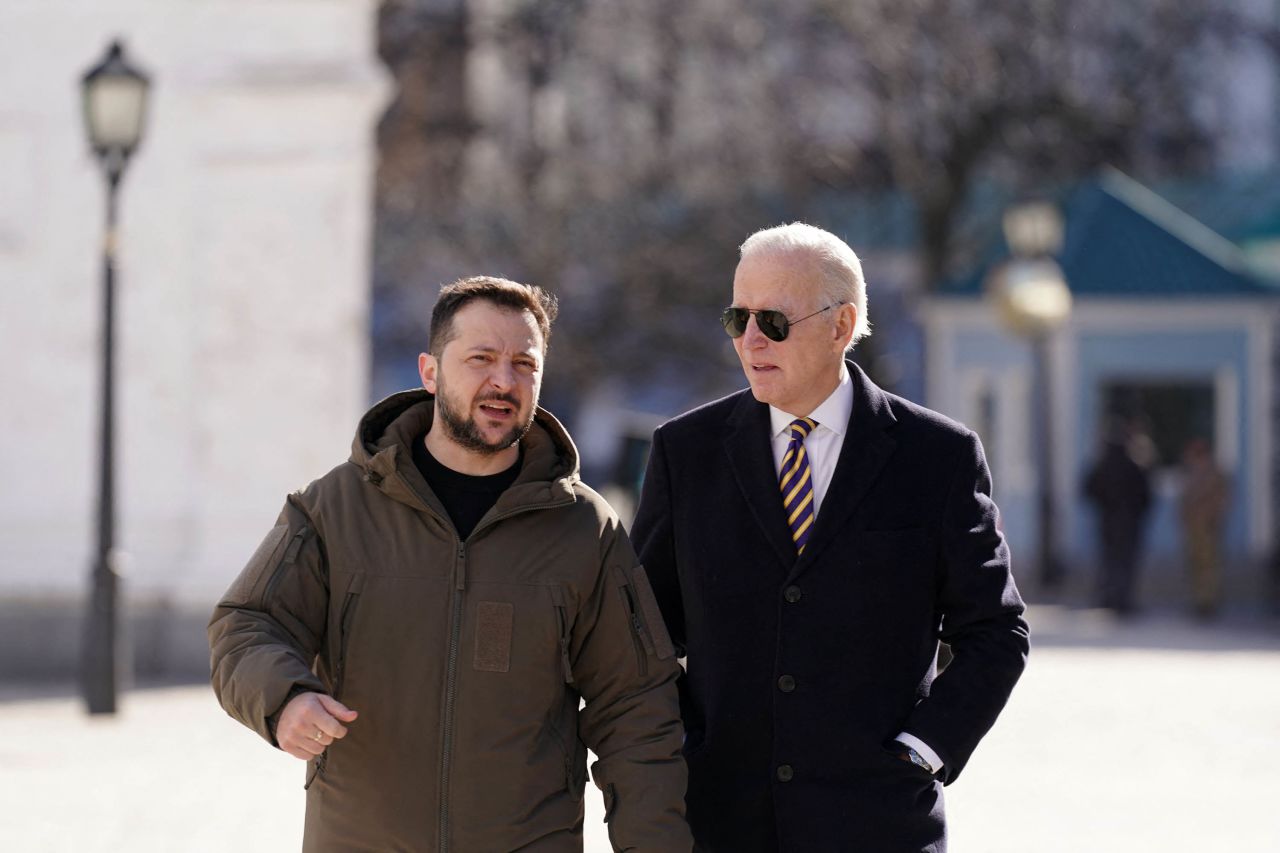
 Joe Biden’s surprise visit to embattled Ukraine is the latest in a series of adept political maneuvers that have heightened the stakes of that conflict and fostered unity of purpose among the allies standing in defiance of Vladimir Putin. As the war enters its second year, questions of strategy and the search for an “end game” become more urgent. What is the path forward, and how can past experience help us find it?

            Ukraine is the third in a series of object lessons about the nature of modern warfare that have unfolded on the global stage in the past two decades. The conflicts in Iraq, Afghanistan, and Ukraine all make manifest a common principle. This truth may be stated succinctly: “An army that believes in its cause will fight; an army that does not believe in its cause will run.”

            This truism might seem too cliché to merit remark, but somehow its significance has eluded leaders throughout the world. To be sure, the lesson is not new. Many conflicts in recorded history, dating back to ancient times, corroborate its validity. But it is worth noting that the world of microchips, satellites, and precision bombs has not altered its saliency. No amount of technology can make warfare a purely mechanical process. Politics remains a durable and determinative factor in military affairs.

            What, then, does a comparison of the conflicts in Iraq, Afghanistan, and Ukraine demonstrate, and how can such a comparison help world leaders make better decisions moving forward? The collapse of the Iraqi Army in the face of the ISIS assault of 2013 and of the Afghan Army in confrontation with the Taliban in 2021 stands in stark contrast to the resolve demonstrated by the Ukrainian Army in the past year. Juxtaposing the three conflicts demonstrates how decisive political factors can be to military outcomes. Both the Iraqi and Afghan armies possessed equivalent or superior numbers and armament relative to their respective opponents. The Ukrainian Army has been outgunned and outmanned from the very beginning.

            It thus must be very clear to world leaders, particularly the leadership of the NATO Alliance, that morale and motivation played a key role in all these events. But there seems to be a soft bigotry at work in the inferences drawn from these facts. European and American leaders appear to believe that the contrasting levels of commitment displayed by the soldiers of Iraq and Afghanistan on the one hand and the Ukraine on the other may be put down to “cultural” differences. Otherwise it is difficult to explain why NATO leaders are determined to make the same mistakes in Ukraine that they made in Iraq and Afghanistan.

           The people of Iraq and Afghanistan do not lack any of the potential for nationalistic conviction and commitment that the people of Ukraine have been proven to possess. The soldiers of Iraq and Afghanistan did not perform poorly for lack of patriotism, but because at the time of their deployment, their homelands were not true nation-states. Iraq and Afghanistan were both occupied by foreign powers, the leadership in Baghdad and Kabul were denied the autonomy and true powers of sovereign governments.

           This was, ironically (given my above remarks on the ways in which politics can trump technology), made most obvious to the soldiers of Iraq and Afghanistan by the state of their armaments. In Iraq, for example, at the time of the ISIS assault of 2013, the Iraqi Air Force had only two combat airplanes, both Cessna prop planes modified to carry a single Hellfire missile each. That was in contrast to the regime of Saddam Hussein, which had one of the largest air forces in the world, able to deploy hundreds of MiG, Mirage, and Sukhoi fighter aircraft.

This wide disparity in capability was demoralizing to the Iraqi Army of 2013 more for its political significance than its material, technological impact. The government of Saddam had been pathological and widely despised, but its ability to acquire and freely deploy advanced offensive weaponry demonstrated that it was truly sovereign. The Baghdad government of 2013 was just as clearly a client of the United States, prevented from arming their soldiers with the basic tools of a modern army by their colonial masters in Washington D.C.

            The Iraqi Army went up against ISIS with slightly better weaponry. They had light artillery and combat helicopters that ISIS did not possess. But the soldiers of ISIS were animated by religious fervor. They were willing to die in suicide attacks to make up for their inferior firepower. The soldiers of the Iraqi Army, in the face of such zealotry, were being asked to die in defense of a government that was obviously a puppet of Washington D.C. Is it really such a shock that many Iraqi soldiers did not feel this game was worth playing? Virtually the same dynamic was at work in Afghanistan, with identical results.

            The distinctive performance of the Ukrainian Army does not arise from differences in culture, but in context. Their Russian opponents do not exhibit any fraction of the zealous passion that animated ISIS or the Taliban. More importantly, Ukrainian soliders have never had to doubt that their national spirit is exerted in service of a government that is authentically sovereign. The Ukrainian Army was (and is) smaller than that of Russia, but well-armed and well-equipped with the current tools of war.

Moreover, though Ukraine has been materially dependent on foreign support of its war effort, Ukrainian leaders have never allowed such dependence to infringe upon their sovereign autonomy. This was publicly broadcast by Volodimir Zelensky’s famous declaration, in the face of American offers of transport to safety in the early days of the conflict, “I need ammunition, not a ride.” From that moment forward, the people of Ukraine have had reason to be confident that their leaders are setting their own agenda, without deference to the priorities of the US or any other foreign power.

Since the success of the NATO-Ukrainian partnership has depended upon the robustly nationalistic morale of the Ukrainian army and people, the worst thing that NATO leaders could do is to encroach upon or violate the sovereign dignity of Ukraine’s government or leaders. Yet when pundits and officials of the NATO nations speak publicly about the trajectory of the Ukraine conflict, they frequently entertain plans that would deeply offend their Ukrainian partners. A significant constituency among the NATO leadership seem to believe that a negotiated settlement could be reached allowing Russia to continue to occupy the Donbas region, the Crimea, and/or other Ukrainian territory currently held by Russian troops. The people and government of the Ukraine will never assent to such an accord.

It does not take much thought to realize why the same spirit that has animated Ukrainian resistance precludes a peace short of the total expulsion of Russian forces. The clear object of Russia’s offensive was to destroy the Ukrainian nation. For the resolution of this conflict to provide any assurance of Ukraine’s survival, it cannot legitimize the goals or methods of the Russian campaign to any degree. Thus the sanction of Russia’s occupation of any portion of Ukrainian territory will be perceived as tantamount to an invitation to attempt the destruction of Ukraine again, at some time in the indefinite future. Put yourself in the position of any of the middle-aged Ukrainian women who have taken up arms in defense of their homeland, imagine what they think as they look at their granddaughters, wondering if those children will have to live through the same cataclysm again, and you can quickly understand why any resolution of the conflict that does not entail a complete withdrawal of Russian forces will not be politically feasible in Ukraine.

If NATO continues to proceed as if a territorial “compromise” is achievable, the strategic partnership with Ukraine will eventually go sideways, producing outcomes comparable (in kind, if not degree) to what was seen in Iraq and Afghanistan. It is unlikely, given the robust spirit that has developed among Ukraine’s people and soldiers, that any pressure from or foot-dragging by NATO will shatter Ukrainian morale as was done to the armies of Iraq in 2013 and Afghanistan in 2021. But such a collapse is not impossible, given world enough and time. If you deprive Ukrainian soldiers and citizens of their nationalist aspirations, you deprive them of an asset that has been much more vital to their military success than money, supplies, or munitions.

There are catastrophes that fall short of an unlikely collapse of Ukrainian political will, however. It would be surprising if Volodimir Zelensky’s government had not already begun researching alternative sources of support, should NATO’s will and enthusiasm begin to flag. Kiev could strike out on its own, producing a far more volatile and unpredictable conflict that might induce horrific destruction and loss of life. The effects of such a development on the battlefield, on the internal politics of Ukraine, and on its relationship with the NATO allies could be profoundly tragic. There is little that Russia can do at this juncture to “win” the war, but there is much that NATO could do to lose it. 

What, then, are the lessons of Iraq and Afghanistan that can be applied to the conflict in the Ukraine? They boil down to this: success for NATO depends upon treating Ukraine as a genuine strategic partner, and not as a client or proxy. Any attempt to strongarm the government or people of Ukraine into a “compromise” they cannot accept will undermine all the progress toward a just resolution of the conflict that has been made thus far. The final goal of all partners in the anti-Putin coalition must be the total and complete withdrawal of all Russian forces from all of Ukraine. For that to happen, the Ukrainians must be supplied with the tools and weapons that will allow them to mount a successful offensive against superior Russian numbers.

          Vladimir Putin will never be dislodged from the Ukraine by purely diplomatic means. His political survival depends on the claim that this absurd, pointlessly destructive war has achieved some semblance of a strategic goal. For such a claim to be tenable, Putin must hold on to some portion of the Ukrainian territory he has annexed. He will never cease fighting unless his opponents assent to some portion of his territorial claims, but this is a concession that the leaders and people of Ukraine will never give. He thus must be driven out of Ukraine by force. Only when it is clear that his army cannot defend its position inside Ukraine will Putin have motive to come to the negotiating table, on the chance that he can barter an armistice in exchange for exemption from liability for the costs of the war.

            NATO leaders have a stark choice. One option is to totally and unconditionally support the Ukrainians in their campaign to restore the territorial integrity of their homeland. The only other choice is to accept defeat, and to face a world in which Vladimir Putin, to one degree or another, gets to set the rules of international relations. For the sake of the welfare of the global community, we must hope that NATO leaders choose correctly.

Wednesday, November 16, 2022

An Open Letter to Dave Chappelle


Dear Mr. Chappelle,


          Hello from the campus of Brooklyn College, where I teach in the Department of History. Long time fan, first time writer. I can hear you laughing as you read that, since it makes the reason for my letter so obvious.

           I watched your most recent SNL monologue on my DVR last night. I was away over the weekend, and it had taken a few days for Twitter and Facebook to cue me in that something interesting had happened. I was so intrigued I watched it twice (okay, I confess, my wife asking about it played a part in my second viewing). 

          It confirmed me in two impressions. The first is that you are perhaps one of the greatest artists our nation has ever produced. I knew you were talented. Some of your work on The Chappelle Show made me laugh as hard as any comedy I had ever seen in my life. But that monologue was a quantum leap beyond anything I've seen another comedian do in a public forum.

           My second impression was that you don't really understand the perspective of American Jews. Not really. I don't make that kind of assertion lightly about an artist of your obvious genius. No one develops powers of insight and creativity like yours without cultivating a great reservoir of empathy. But somewhere in your friendships and other interactions with members of the Jewish community you have come up against the limits of that resource.

           I think I understand what you were saying on Saturday night. "Talking has become too hard." Kanye is a case in point. Like you, he is a great artist. And I know how much you like and admire him personally. His performance of "Jesus Walks" with the Central State University marching band is my favorite part of Dave Chappelle's Block Party. Your SNL monologue is made all the more awe-inspiring because it was so much an act of personal courage and devotion to a friend.

          I see the logic in your argument. The price Kanye has paid is huge. One billion dollars for a few stupid remarks from a man unwell enough to ridiculously spout about being too rich to wear gold chains. It is especially unfair against the context of a man who told four Congresswomen of color to "go back where they came from" and yet still has every prospect of being the next Republican nominee for the presidency.

         But there's something you seem to be missing. You acknowledged that "the current climate" impacts how we should read Kanye's words. For Jews, that is like saying that the meteor hurtling toward earth should inform whether we decide to carry an umbrella. In a few short years we've watched lunkheads with tiki torches marching around chanting, a horde of fascists swarming like ants over the Capitol, a Nazi with an AR-15 shoot up a synagogue. 

        The other night a friend asked me "are they going to send us to the ovens?" I'm a historian, but I don't have a crystal ball. If like mine, your daughter were Jewish, would you feel confident that the answer to that question was nothing to worry about? 

        A man who can sell a billion dollars worth of shoes is a man that reaches A LOT of people. The Nazis who hung signs over highways saying "Kanye was Right" know exactly what that kind of publicity is worth. If things go the wrong way in 2024, that tag line is sure to make a comeback.

     You are right, it has become too hard to talk. But some of the reason for that lies with the toxic nature of so much that is being said. At times like this, it becomes as hard to listen as it is to talk. You have a brilliant voice, and I hope it is never silenced. But I hope you will listen too. 


                     Sincerely,


                     Andrew Meyer


Thursday, October 13, 2022

Between Despair and Hope in Ukraine


The war raging in Ukraine opens a new phase in the post-Cold War era of global affairs. For the past two decades international relations have been highly inflected by the events of September 11, 2001 and the US response to those attacks. Moving forward from the current moment the outcome of the war in Ukraine will have a similar shaping impact.

               The moral stakes in Ukraine are enormously high, but it is of course always advisable to take as practical and dispassionate a view of such conflicts as possible. We are well advised not to focus on what ideally should happen but rather on what is certain or at least most likely to happen in concrete terms. If we do so, however, we find that the moral and practical dimensions of the Ukraine war are inextricably intertwined. The dangers of thinking or acting too cynically are as grave as the potential pitfalls of moral idealism.

             To understand why this is so, one only has to begin by asking a deceptively simple-seeming question:  “Why did Vladimir Putin invade the Ukraine?” All of the reasons that Putin himself have given are utter nonsense. The idea that Ukraine is organically a part of “Mother Russia” was long ago shown to be ridiculous, in the strife following Putin’s machinations in Crimea and the Donbas region. The canard of “de-Nazification” is deliberately laughable. It broadcasts the contempt of a man who insists that anyone who opposes him does not even deserve to be spoken to seriously.

           The true logic of Putin’s invasion is ultimately inseparable from the logic of his obscenely cleptocratic regime.  Russia is territorially the largest nation on earth, covering more than 6.6 million square miles richly endowed with natural resources. Its 144 million people are among the best-educated in the world. Yet its economy is smaller than that of Italy, and its GDP per capita ranks fifty-seventh in the world, well behind nations such as Greece (51) or the Bahamas (45). Russia’s rate of economic growth is shockingly slow when compared with other formerly communist nations possessed of similar assets.

       All of these conditions reflect the reality that Putin has turned what should be one of the wealthiest and most powerful nations on earth into the turf of a primitive criminal syndicate of which he is head. He and his cronies are a literal network of vampires who keep order by sucking the lifeblood of Russian society nearly dry. This network extends beyond Russia’s borders into the satellite nations of the former USSR. The sheer improbability of such a monstrosity in the 21st century was made manifest by the “Revolution of Dignity” that swept Ukraine in 2014. The grotesque insult of being made part of a thieves’ banquet for Putin’s cronies was infuriating enough to galvanize Ukrainians and set them on a path to both democratic independence and a collision with Putin’s murderous machine.

        Only if we remain clear about how ludicrously retrograde Putin’s regime really is can we understand the degree of desperation expressed in February’s invasion. In explaining why this war happened many observers either give too much credence to Putin’s deliberate absurdities or focus myopically on the wrong side of the “risk-reward” calculation upon which the war was predicated. It is true that Putin was emboldened by overtures of friendship from Xi Jinping and by the success his “active measures” campaigns had achieved in sowing discord throughout Europe and America. He was also obviously ignorant of just how degraded his military had been by the corrosive graft of his cleptocratic regime.

          But though these facts help explain why Putin sorely underestimated the risks of invasion, they do not account for the urgent goals that he gambled so much to achieve.  By February it had become clear that the resistance to vampiric Putinism had spread from Ukraine into Belarus, Kazakhstan, and beyond. Robust popular protests against the cleptocratic regimes in those states coincided with the resurgence of activism by Russian dissidents like Alexei Navalny. Putin knew that he had to put the vampires back in charge in Ukraine, or the whole network underpinning his power might unravel and bring him down with it. That is what this war has been about all along, and that is why there is little that anyone can offer Putin in pursuit of a negotiated peace. Anything short of sinking his fangs back into Ukraine’s arteries will not appease him, and the Ukrainians know it.

           Since the ends Putin has been pursuing are so transparently and egregiously illegitimate, any “compromise” aimed at avoiding tragedy will inevitably produce a tragedy as bad or worse.  This is clearest from the perspective of the Ukrainians. The horror of more death and destruction is awful. But the horror of trading in their new but vibrant democracy for the rule of Vladimir Putin  (a man who, for example, builds palaces for himself at the cost of $1.4 billion while poisoning his opponents with polonium) is even worse.

              Yet even if we branch outward from the perspective of Ukraine to that of the entire world, there is no redeeming value in offering Putin an “off ramp.” Pundits express understandable concern about the prospect of Putin using nuclear weapons (there is obviously no limit to how many he is willing to murder), but the very nature of his threat compels world leaders to ignore it. Since Putin’s goals in this conflict are completely and transparently illegal, immoral, and illegitimate, there is no way that any degree of success he garners will be perceived as anything but the fruits of nuclear blackmail. If he gains a single square yard of terrain, the world will know that it was given to him solely because he threatened to commit unprovoked mass murder.

              When blackmail succeeds once, it will inevitably be tried again. Any nation or leader who has any conceivable pecuniary interest, no matter how criminal, will maneuver to achieve those ends through threat of nuclear arms. Nations who have nuclear weapons will brandish them freely. Nations that lack nuclear weapons will pursue them ardently. That dynamic can only end one way: with a nuclear conflagration. The choice before leaders right now is thus clear: we are poised between the possibility of a nuclear catastrophe if they move to thwart Putin and the certainty of nuclear catastrophe if they do not.

           There is only one outcome of the Ukraine war that can be acceptable to decent people throughout the world: every Russian soldier must leave every square foot of Ukraine, including the Donbas region and the Crimea. Any other aspect of the aftermath of the war might be negotiable (reparations for Ukraine from Russia, consideration of the rights of Russian-speaking citizens of Ukraine, etc.) , but Vladimir Putin’s illegal and immoral invasion of Ukraine (which began in 2014) must be undone. That should be the message coming from every capital in the world, but especially from Washington, D.C. Any fear that such unequivocal demands pose risks is pure folly. Until Putin knows that his opponents truly understand what is at stake, he will continue to play for time and hope that his foes’ political will and unity will collapse. If he were ever given a clear signal that the jig was up, his bluster would evaporate.

             The entire world is frozen between despair and hope in Ukraine. If Putin’s vicious gambit succeeds to any degree, the future trajectory of global affairs will be grim. The neo-fascist politics Putin advocates will spread, and more governments throughout the industrialized world will fall to vampiric cleptocracies. Global diplomacy will degenerate into a farcical game played by gangster regimes bent on plunder. Violence will proliferate.

              If Putin can be thwarted, however, the effects will range from the benign to the marvelous. Democracy could take hold in the former soviet republics, perhaps even in Russia itself. A new age of global cooperation and shared prosperity might ensue. That message should be broadcast by world leaders clearly, especially to the people of Russia: a better world awaits everyone, if only this mad spasm of murderous greed and villainy can be made to abate.

Saturday, July 02, 2022

An Open Letter to President Biden on the Repeal of Roe v. Wade


Dear President Biden,


         I was encouraged to see you endorse the elimination of the filibuster in order to pass legislation protecting women’s reproductive rights and health. We have never faced a comparable crisis in our nation’s history, in which a single ruling of the Supreme Court stripped protections from millions of people, turning them instantly into second-class citizens. Truly drastic measures are justified.

         I would urge you to make the passage of such legislation a priority of your administration. The bill that is needed would be a strict codification of the protections afforded by Roe, with a guarantee of free access to abortion in the first trimester of pregnancy and clear limits on the power of the government to regulate reproductive health in the second and third trimesters of pregnancy. Such a narrowly construed bill will be difficult to pass. Conservative members of the Democratic caucus will fear it is too bold a step, progressives will feel it does not go far enough. It is for precisely this reason that the bill must cleave as closely as possible to the stipulations of Roe. A return to the status quo ante stands the greatest chance of overcoming factional resistance.

        Such a bill is imperative both in principle and as politics. In principle it is the only way to restore full citizenship to millions of Americans. As politics it will force the GOP to run on a platform of repealing women’s rights, thus fully revealing one of the most malignant impulses that now animates the Republican Party as an electoral coalition. Codifying Roe is not only the right thing to do, it is the last hope your party has of generating support for this fall’s midterm election. It would be a chance to show Americans that Democrats can, in acting on their beliefs, make citizens’ lives better.

      Of course, such a bill would not be enough. The Constitution will have to be amended to protect Americans of all genders’ rights against the continued assaults of sexism, racism, and homophobia. But that is a long term fight. For now the malignant actions of the Court must be countermanded. Thank you for your attention to this matter.


                  Sincerely,


                Andrew Meyer

Wednesday, May 25, 2022

Federally Mandated Firearm Liability Insurance (Reposted)


In the immediate aftermath of the Newtown massacre I posted a short piece on the issue of gun control. Twelve years later, the idea I proposed in that essay has achieved no traction. In the wake of the most recent tragedy in Uvalde, Texas, the discussion of the issue has settled into familiar patterns. Calls for "common sense legislation" like background checks abound. Unfortunately, the inevitable lack of motion on such basic proposals cannot help but radically demoralize citizens and politicians. I thus hope that re-posting my idea from a decade ago might be timely in the face of persistent sorrow, in the hope that a different approach to the problem might break our political deadlock:

The legal and social forces impacting this question [of gun control] are intensely complex, but the need is so urgent that I hope we may see forceful and rapid action to reform our gun law regime in significant terms. In that spirit, I would like to add my voice to others who have proposed a policy solution that might form a departing point of consensus over a fraught issue: the adoption of a federal mandate requiring liability insurance for the purchase and ownership of a firearm.

First, let me address the underlying principle of such a proposal. The logic of requiring gun owners to purchase liability insurance is the same as that which applies to users of automobiles. Right now the rights of gun ownership are private, but the costs of gun accidents, injuries, and violence are socialized. This is a fundamentally unfair situation. The second amendment guarantees that gun ownership is a right, not a universal actuality on the terms most convenient to those desiring weapons. If the second amendment allows that every citizen may be compelled to pay the fair market value of a weapon, it also allows that each gun owner may contribute toward private funds mitigating the social costs of gun use.

This policy would naturally serve as a "gateway" impediment that would deter gun sales, and those who oppose gun law reform might argue that it would keep firearms out of the hands of those who "need" them. This is a complicated point of contention, but it in no way rises to the level of a disqualifying objection. The potential benefits of such a policy are so salient that any ancillary "down side" could be remediated by, for example, the passage of subsidies to make coverage accessible to small business owners and low-income citizens who might otherwise be blocked from gun ownership.

In social policy terms, this measure would be a versatile means to use the forces of the free market to foster gun safety and responsible gun use. Actuarial studies could determine the level of liability coverage that was optimal for all gun owners, and private insurers could be relied upon to sell such coverage to individual gun owners at the fair market cost. Naturally, gun owners who could demonstrate that they had adequate gun safety training, had laid plans for the secure storage of their weapons, and had purchased weapons whose design minimized social hazards (e.g. "smart guns" with private locks or designed to be operable only by their owner) would attain the most favorable rates of coverage from private insurers. Such an insurance regime would not only influence gun owners, but gun manufacturers and retailers as well, incentivizing them to adopt best standards and practices that promote gun safety and security in the community at large. Thus with a minimum of government intervention behaviors could be widely fostered that would be socially constructive and might deter tragedies like the most recent sorrow in Newtown.

Monday, May 09, 2022

We Will Only Miss Roe When It Is Gone


It was very disorienting, on stepping off the plane after an 18-hour flight to Singapore, to be assaulted by the news that the Supreme Court is on the verge of overturning Roe v. Wade. It was a scene from a sci-fi novel. Somehow the plane had not only deposited me on the other side of the globe, but in an alternative reality. Something like the “multiverse” described in the most recent Spider-Man movie.

            The gratuitous pain that will flow from these events is bizarre to contemplate. Media coverage and mainstream political commentary will focus on the reductive issues of abortion and choice. We will hear much about the horrors of back-alley procedures and the crushing economic consequences of unwanted pregnancy. While all of those concerns are real, they are just the tip of a large and grotesquely toxic iceberg. Roe has been protecting us from some of the most malignant dimensions of our own politics for many decades. We have taken the decency and social equity produced by Roe for granted, and are going to REALLY miss it once it is gone.

            Absent a consensus that a woman has full rights over her own body, the full power of the government will be available to be harnessed by fanatics and bigots of all stripes and magnitudes. If the rights of a fetus can trump those of the woman who carries it, all women become subject to massively expanded surveillance powers of the state, and will be susceptible to controls to which no fully autonomous citizen would be compelled to assent.

The government will have an interest in knowing whenever a women is late for her period, so as to know whether or not she is carrying a “person” in need of “protection.” Each woman’s movements and habits will thus be open to expanded scrutiny to that end. Any time a woman might be pregnant it will be logical to restrict her work and travel. She could not do any job that might increase the risk of a miscarriage, and would have to be prevented from traveling to a place where abortion is legal.

Anyone who scoffs at such worries sounds a lot like those Germans who laughed off the danger to Jews in Germany in 1933, when Hitler first became Chancellor. If you create an opportunity for fanatics to use state power they seize it, and they use it without any regard for what the majority might consider “reasonable” or “decent.”  Most Americans do not vote on the issue of reproductive freedom because it is much like food: as long as you have it in good supply, you pay little attention to where it comes from. It is only when such a basic asset begins to run out that it becomes an urgent concern. Those voters who did concern themselves intensely with reproductive freedom before now were mainly concerned that everyone else had too much of it. As those voters' wishes come true, everyone else is going to feel the noose drawing tighter.

If Roe v. Wade is overturned, it will be the moral equivalent of reinstating the Dred Scott decision or nullifying Brown v. Board of Education. Instantly, millions of Americans will be turned into second-class citizens. The practical impact of that state of affairs on the lives of millions of women will be slow to build, but inexorable. The only redress will be to amend the Constitution by way of restoring the autonomy and dignity of all Americans. In the current climate of polarization it is difficult to imagine such a remedy meeting with success. But as the fanatics and bigots do their work, and as the peace, security, and decency that Roe afforded us as a society melts away, the momentum to amend the Constitution will build. The task will be long and the effort strenuous, but the work begins now.


Wednesday, March 23, 2022

An Open Letter to President Joseph Biden


Dear President Biden,


        As a concerned citizen I write you about our efforts in the U.S. to aid the people of Ukraine. The invasion of Ukraine by Vladimir Putin is not merely an illegal act of aggression, it is a combination of malignant demagoguery with the most venal form of kleptocratic greed. On the one hand Putin sells his murders as being in service of a racially defined "Greater Russia" that is purely fascist in conception. On the other hand his campaign is aimed at putting the wealth and productivity of Ukraine at the disposal of him and his cronies, so that they might buy more mansions and yachts. It has become rare to see acts of such naked evil perpetrated on such a large scale since the end of World War II. 

        Your leadership in this crisis has been commendable. You have taken a strong stand against Putin's villainy, and kept our allies unified in providing material support to Ukraine and imposing punishing sanctions on the Russian economy. But I fear that the greatest tests may lie ahead.

        Though the Ukrainian people and their president have mounted a heroic defense of their homeland, they remain massively outgunned by the Russian military. In Chechnya and Syria Vladimir Putin has shown that there is no bottom to his homicidal depravity. He will continue to escalate the level of murderous destruction leveled against the civilians of Ukraine, including the elderly, children, and infants, until the will of the Ukrainian people is broken or until there are not enough of them left alive to wage a resistance. As Putin does this, his threats to use nuclear weapons will become more brazen and more grotesque.

           We cannot let that happen.  The fall of Ukraine would usher in a newly nihilistic era in world politics. Every bad actor in the globe would feel emboldened to use force in pursuit of pecuniary interests. Nuclear proliferation would spin out of control. The clear lesson of Ukraine would be that a nuclear-armed nation can hold the rest of the world hostage, and so every petty tyrant on earth would demand to have atomic weapons, and the time before one was used would be short.

        There has been much discussion about the ways in which US intervention in Ukraine could inadvertently set off World War III. Such concerns are valid, and in a crisis such as this, caution is always wise. But we must understand one thing: while intervention to assist Ukraine might trigger World War III, the destruction of Ukraine will make World War III an absolute certainty. We must do anything and everything we can to prevent that from happening, up to and including the imposition of a no-fly zone to interdict Vladimir Putin's campaign of murder and terror.

        Thank you for brave leadership in hard times. I hope this message finds you well, and that you will be guided by the highest wisdom in your confrontation of this crisis.


           Sincerely,

            Andrew Meyer

Wednesday, March 09, 2022

The Zelenskyy Lesson


Volodymyr Zelenskyy has been giving the world a master class in leadership since the beginning of the invasion of Ukraine. It should not be surprising. Though Zelenskyy rose to power as a celebrity and a comic (embodying the same regrettable trend in world politics that gave us our last president here in the US), some of the same dimensions of his career and experience that made him such a dubious leader in peacetime make him ideally suited to the current moment of crisis.

            In fact, the lesson that Zelenskyy is giving all of us extends far beyond his specific circumstances, or even the particular abstract case of “a wartime leader.” Zelenskyy embodies a principle of political dynamics that is starkly manifest in history, but that few political leaders seem to understand. Certainly his lesson would have been of enormous profit to the last four administrations here in the US.

            What is Zelenskyy teaching us? Simply this: that the outcome of political or military conflicts is virtually never predetermined from the outset. All conflicts evolve dynamically in response to the choices and actions of the key participants. The one and only question that determines the level of influence a leader may exert on the outcome of a crisis is: “What is s/he willing to risk?”

            That would seem an obvious truism, but it is a principle that few American leaders have understood or embraced in recent decades. Most American foreign policy, especially in the face of conflict and crisis, is informed by what I call the “static state fallacy.” American leaders look at what they believe the tactical situation is at the beginning of a conflict and assume that those facts will remain unchanged, thus the outcome is predetermined. They then decide what to do on that basis, with the virtually exclusive goal of avoiding risk.

            A tragic example of this error can be seen in the case of Syria in 2011-2012. As the uprising against the brutal Assad regime began, the situation was quite fluid. High ranking members of Assad’s cabinet defected. Few in Syria knew what to expect. A robust sign at that point of support for the insurgency by the US (for example, the declaration of a “no-fly zone” to protect innocent civilians from the brutal terror inflicted by Assad’s air force) would almost certainly have shifted the conflict against the Assad regime and foreshortened the civil war.

            Why did Barack Obama refuse to act? He assumed that the amount of support for and opposition to the Assad regime was fixed, thus US action would not influence the outcome. He also assumed that the fall of the Assad regime, even if it occurred, would put Syria into the hands of radical, malignant jihadists. Risking the loss of US pilots in a maneuver like a “no-fly zone” was thus a poor tradeoff. This was a clear example of the static-state fallacy: Obama failed to understand that US action could not only re-align people’s expectations in ways that would decrease the power of the Assad regime, but also in ways that decreased support for the jihadists.

           The number and power of jihadists in Syria was never predetermined. By failing to act the US helped foster groups like ISIS, who gained support because they filled a power vacuum created by US passivity. If the US had understood and acted on the Zelenskyy Lesson, much suffering might have been avoided, and many subsequent events (for example, the US election of 2016) might have occurred differently.

            Zelenskyy’s example is proof of this principle. The outcome in Ukraine was never predetermined. If Zelenskyy had accepted the opportunity to flee offered him by the US (to which he famously responded, “I need ammunition, not a ride”), Putin almost certainly would have captured Kyiv by now. Zelenskyy’s flight would have signaled to the whole world that Ukraine expected to lose, and that expectation would have become a self-fulfilling prophecy. Many Ukrainians who were on the fence, who were waiting for some sign of their compatriots’ commitment to the cause of Ukrainian nationalism, would have read Zelenskyy’s flight as a sign that all was lost.

            Instead, Zelenskyy’s refusal to flee and his deliberate visibility has galvanized the determination of Ukrainians to preserve their hard-won national independence. It is a true meeting of the man and the moment. All of Zelenskyy’s training as an entertainer, his comfort level in front of the camera and ease of expression, make him the perfect figure for the role he must play.

            But of course there is one thing Zelenskyy brings to the table that no one could have anticipated, perhaps even Zelenskyy himself. It is his obvious willingness to die. Zelenskyy clearly understands something about nationalism: it entails making the nation into an ultimate value, and for that to be true someone has to stake his or her life for the nation. That is what Ukrainians are responding to so viscerally.

            As a fellow Jew, two of whose grandparents emigrated from Ukraine, I cannot help empathizing with Zelenskyy’s existential situation. In life, Jews can generally only ever hope to be perceived as marginal figures, never wholly integrated into whatever group to which they currently belong. But by risking death Zelenskyy has finally escaped the Jewish dilemma. He has made himself the very embodiment of the Ukrainian soul. How vexing it must be for Vladimir Putin to encounter a President who actually believes in something, and is ready to sacrifice for it.

            This is not to suggest that the “Zelenskyy Lesson” requires that leaders must always risk death (their own or that of others) in order to influence political outcomes. But in order for leaders to influence the dynamic of any crisis, risks must be taken. Each crisis evolves in accordance with the expectations of those involved, and all participants set their expectations by the signs of what everyone else is willing to risk.

The US has taken risks in the Ukraine crisis thus far. But the point at which the US signals that it will risk no more, its capacity to influence the outcome of the crisis will evaporate. Will that point come late enough to save the people of Ukraine from destruction? For the sake of the entire world, I hope it does.